GLIDER CHRONICLES 2011 – June 25th : Vintage Beauties

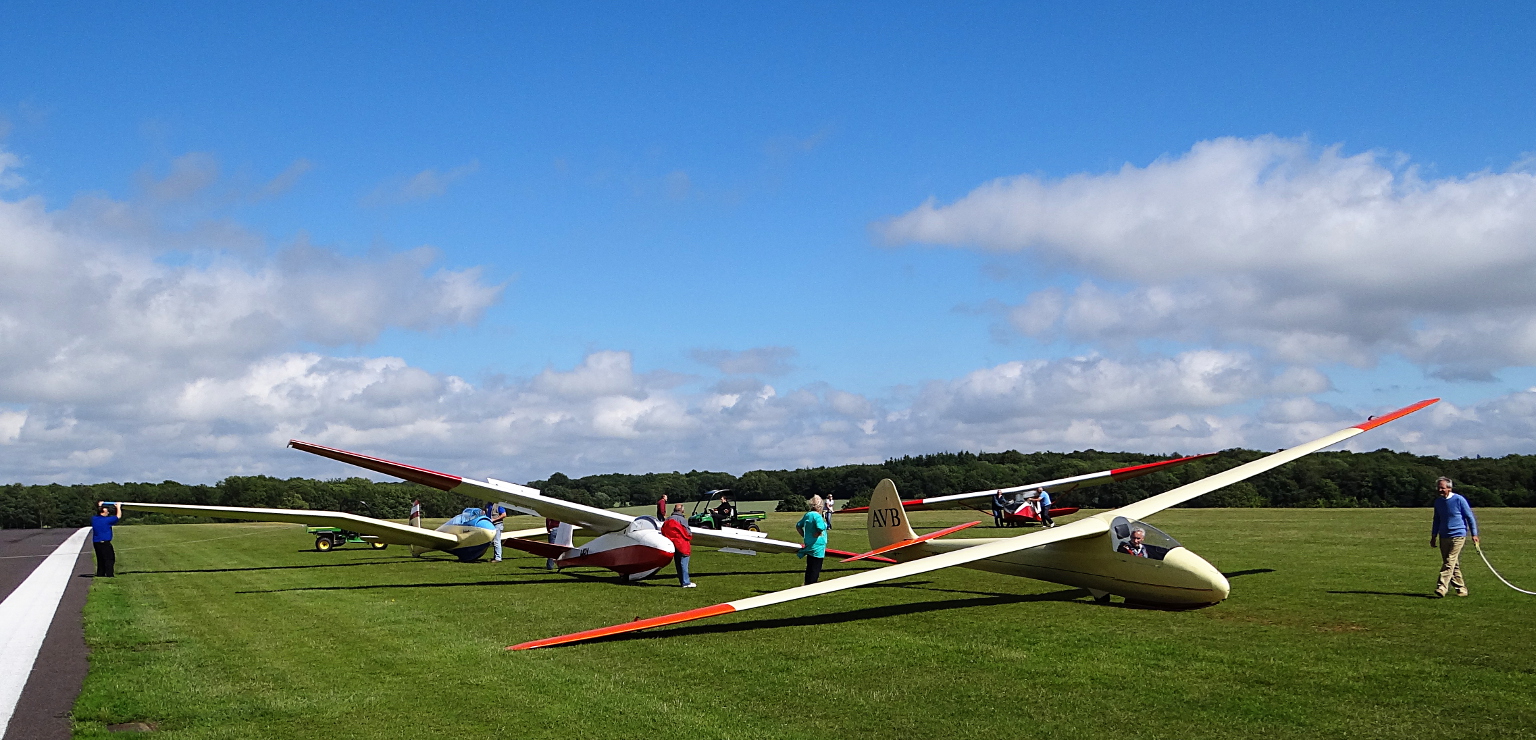
The Saturday evening youth group had a real treat on this day because it was a Vintage Gliding Club memorial day for Chris Wills – a VGC founder. This meant that there were lots of stunningly beautiful old gliders about which, due to the inclement daytime weather, were flying later into the early evening.

A flypast had been organised so we had to hold operations later in the evening for this to happen, followed by an aerobatic gliding demonstration flight.

Due to the bad daytime weather I did not fly, but still got to the club early enough to get some pictures of the vintage aircraft. The first one I came across was an immaculate example of that old powered training and aerobatic biplane, the Tiger Moth. So my evening of picture taking started with these shots:

Rear shot showing the lovely curves of the tailplane.

An immaculately turned out G-EMSY.


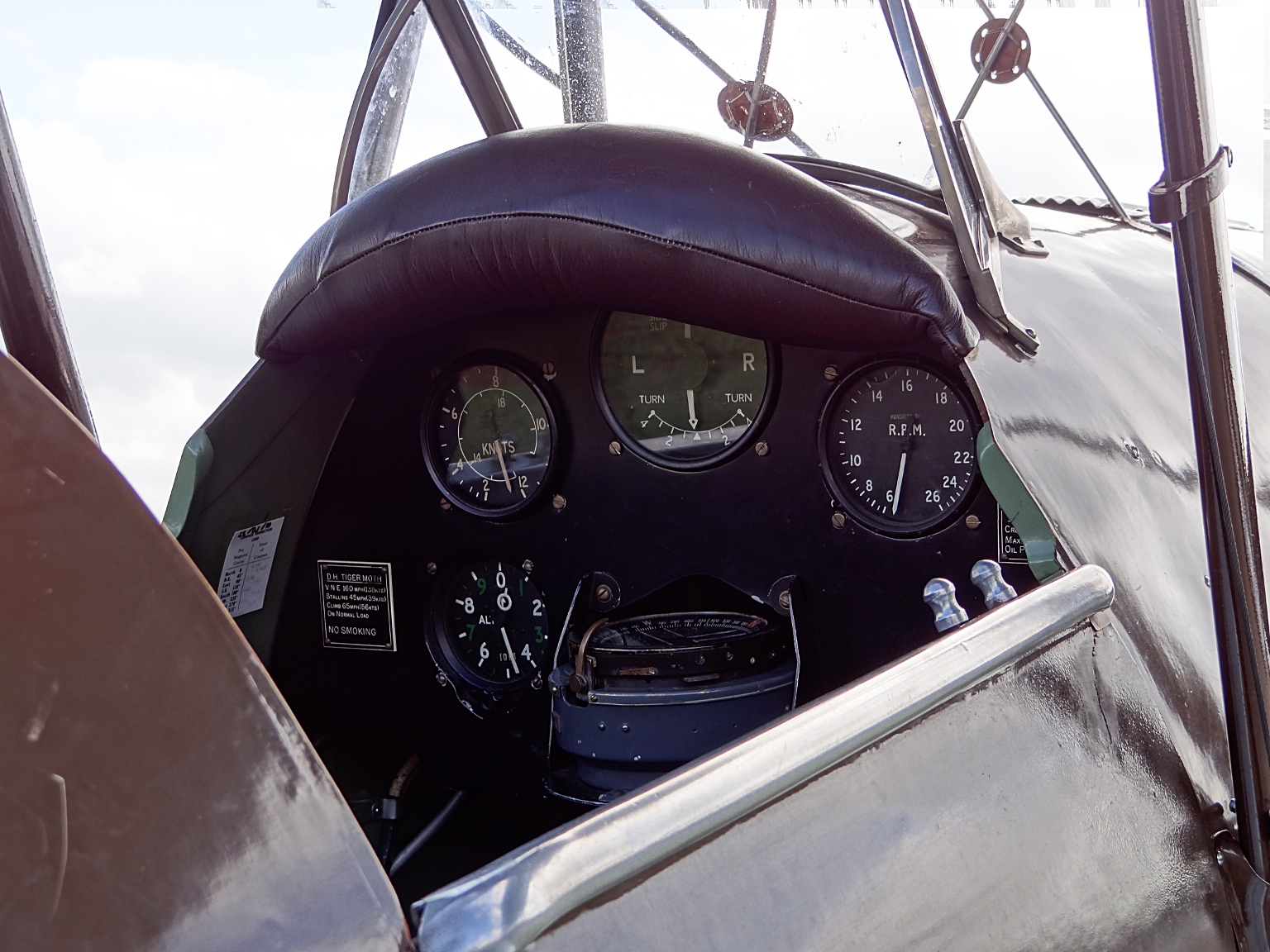
It was also the perfect opportunity to try an HDR (High Dynamic Range) image – this being one where the camera takes 3 images at different exposures and combines them into one. It basically allows you to see the darker cockpit interior well, despite the bright ambient sunshine.

Tiger Moth cockpit showing the lovely old instruments.

Close shot of the wing of the Slingsby T-13 Petrel.

I then returned back to the club hangar and found one of my favourite looking gliders – the Slingsby T-13 Petrel. This shot shows the internal ribbing of the wing. This glider has neither flaps nor airbrakes so you need to get your side-slipping sorted out or else judge your approaches really well.


Explanation: Side-Slipping (or How To Turn Your Glider Into A Brick)
A number of older gliders either did not have airbrakes, like the Petrel, or had very weak ones. This is a problem when landing since you can fly on for a long way in a glider and may need a very long field indeed. Thus we are taught to perform what is called a side-slip.

Normally when you fly you try and harmonise the turning and banking of the glider. So if you bank to the right you also turn to the right with the rudder. Thus you are coordinating the controls. A side-slip involves purposely crossing the controls.

So in a side-slip if you bank to the right with the ailerons you use opposite rudder to the left. This then makes the aircraft turn its right side to the airstream and you go down slightly sideways – quickly! (See my Adverse Yaw Exercise in this post to get a feel for this attitude) This is very useful if you find you have too much height on approach. Needless to say you straighten the aircraft up before you actually land.

Great fun, as I usually say. However, there is a knack. The problem is that the instrument for measuring the airspeed – an Airspeed Indicator, or ASI – will give an accurate reading when the airflow is head on to the measuring tube, called a Pitot Tube. When you side-slip the airstream goes sideways across the tube and usually makes the ASI under read, meaning you cannot trust it. So you have to adjust the attitude of the glider by eye, keeping the view out the front correct so that you keep the airspeed constant, which you usually only find out when you stop the side-slip! Hence the training. We had a good session of that in my Solo to Bronze week.

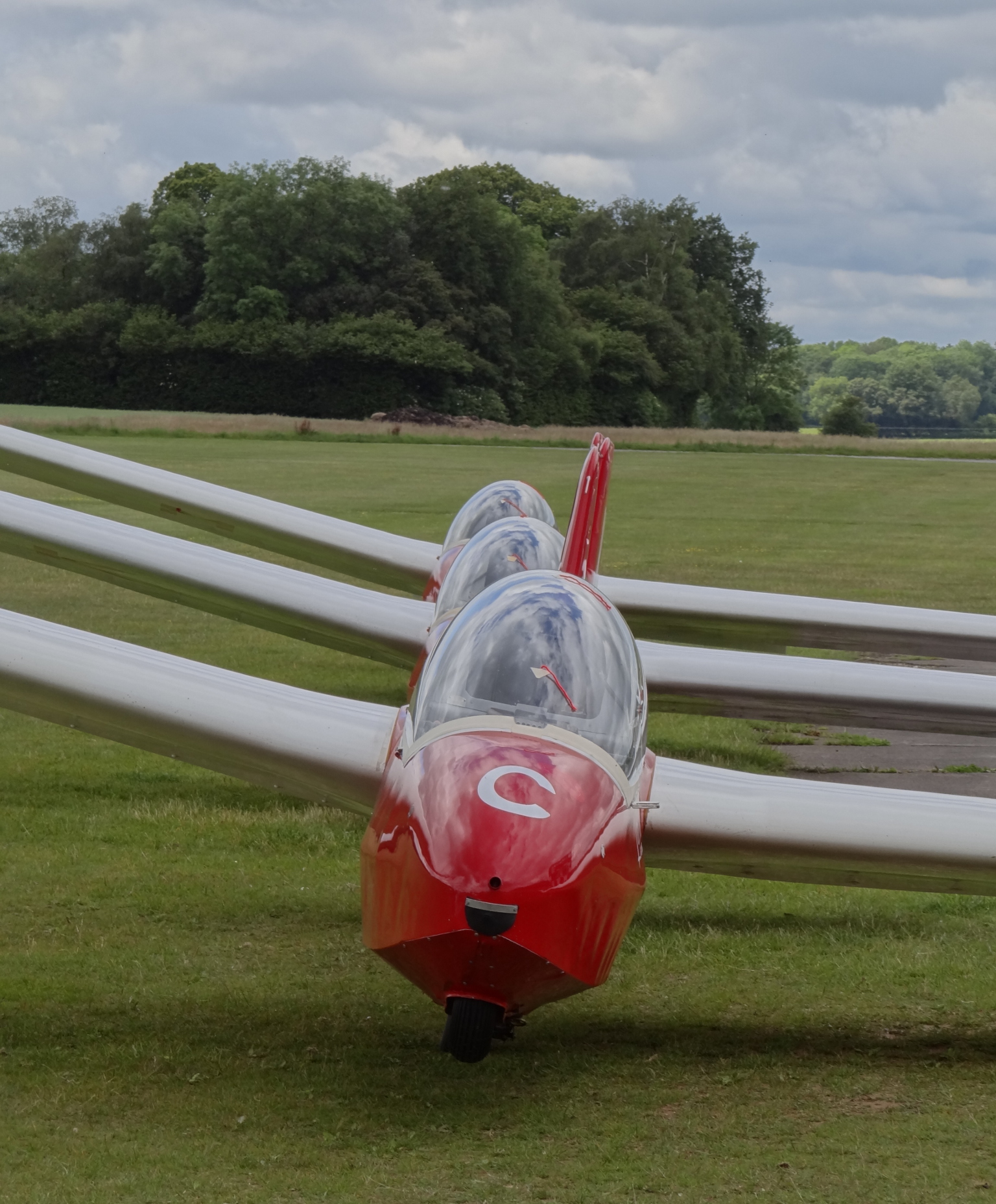
The EoN Primary awaiting the intrepid pilot.

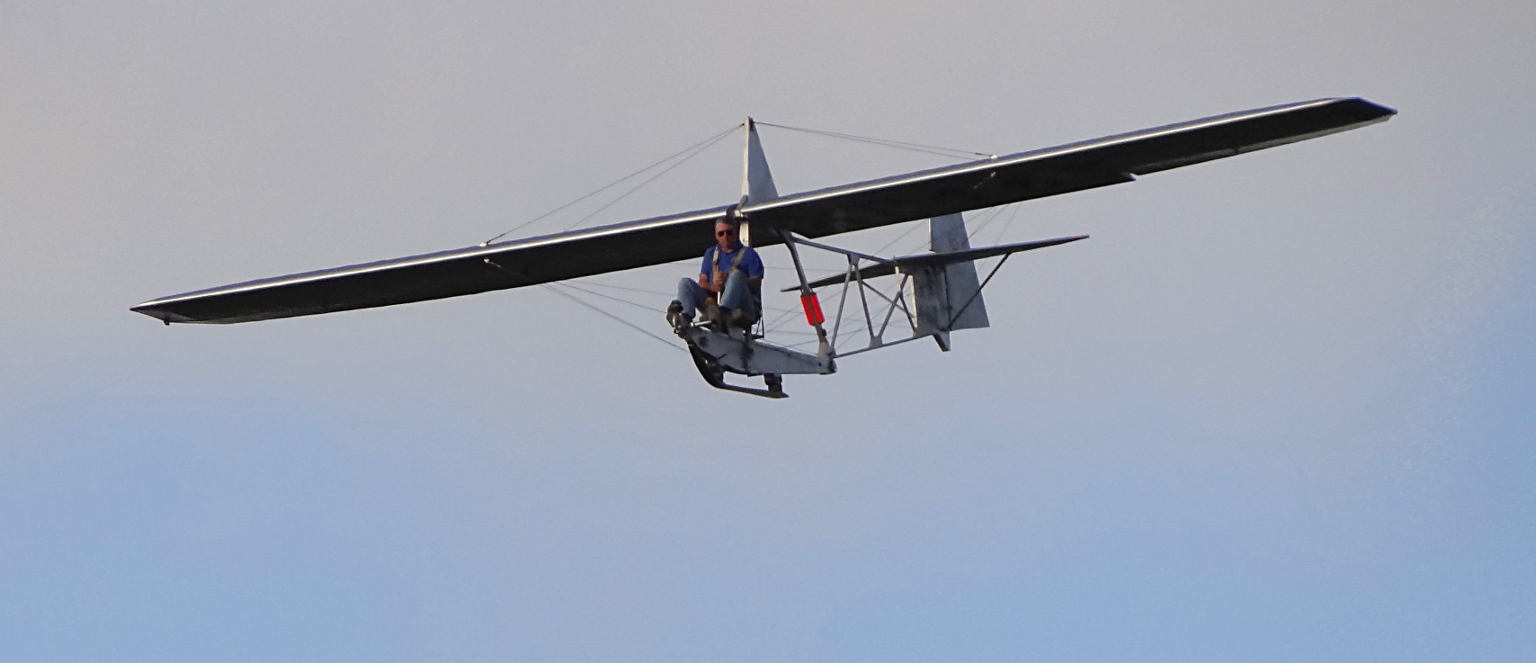
The other glider that I saw on the ground – well… I hesitate to call it a glider since it really does come down like a brick, even when flying normally – was the Primary trainer or SG38.

In the early days of gliding this would be used for initial training, when two seater training gliders were not available, and it would be towed behind a car – so I have been told. Nowadays you can get one of the slower tug aircraft to give you an aerotow to 3000-4000ft. Apparently it takes longer to go up on the aerotow than it does for the Primary to glide, or should I say fly-ish, down.

But imagine sitting on the front of it with almost nothing around you but thousands of feet of air. Definitely on my todo list.

I can hear some people questioning my sanity.

Please form an orderly queue – others got there first.

A set of beauties and a really lovely atmosphere.


After some of these initial ground photographs, it was over to the launch point to get ready for the evening, and to see some of the vintage gliders being launched. It was a lovely atmosphere with more of a sense of the slower tempo of yesteryear. Do you remember when people used to think that all this modern technology would give us more leisure time? Not sure what happened to that.

The right hand picture below is of a Slingsby T45 Swallow being launched. For those in the know I have left the 2 people in the front of the shot. The person chatting with his face to the camera is the great Derek Piggott, a past CFI at Lasham from 1953 to 1989.

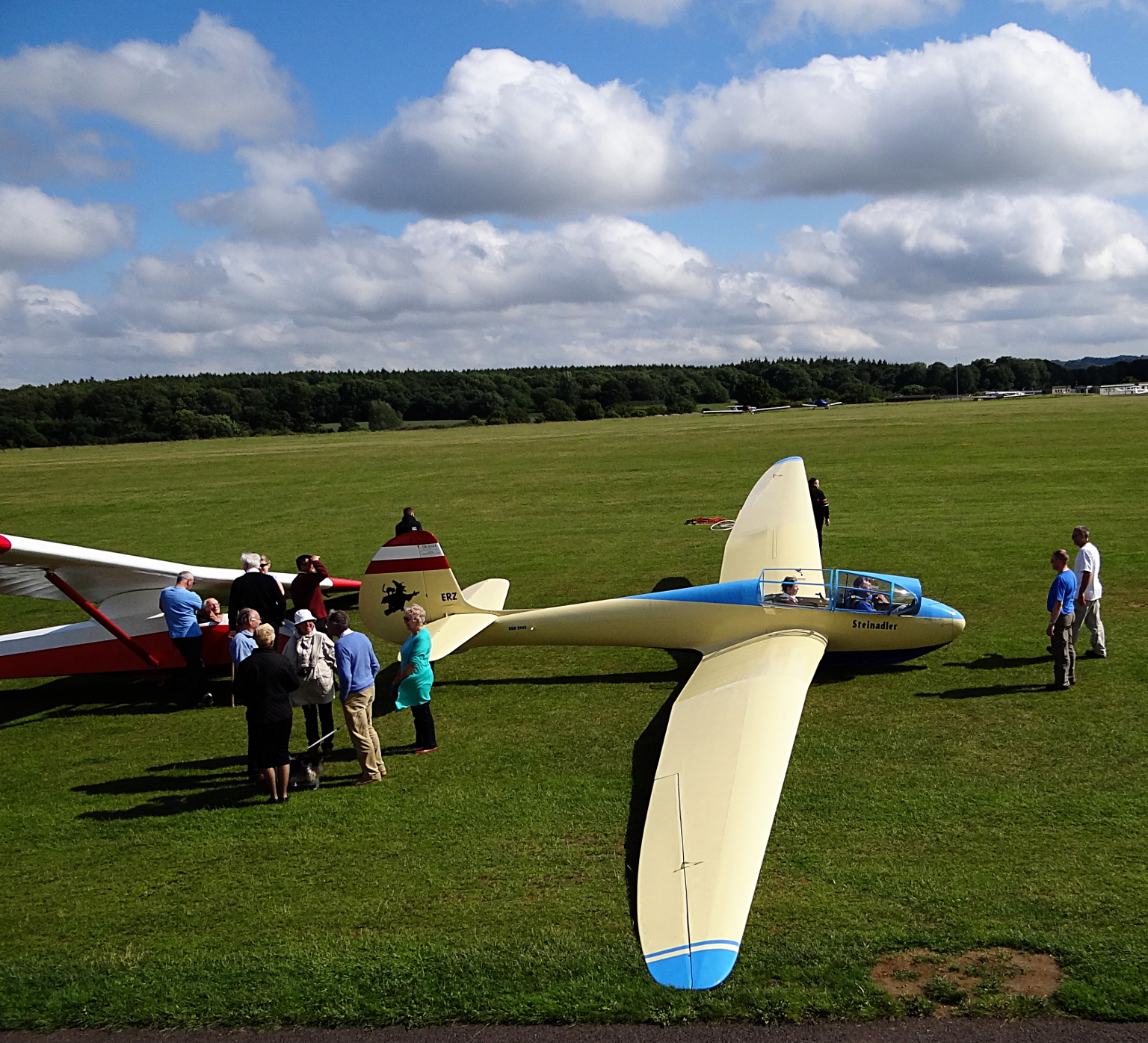
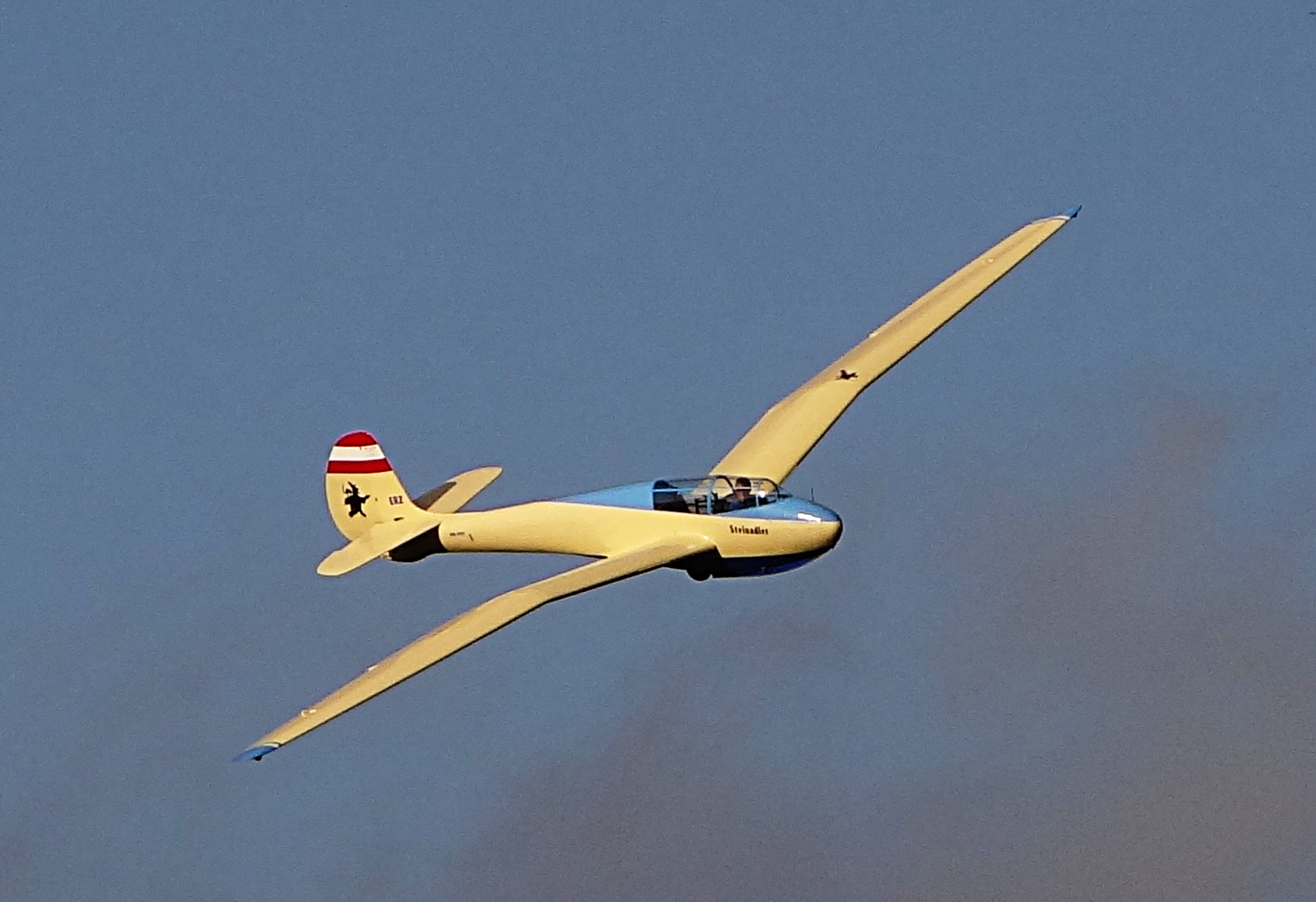
The beautiful gull-wing Steinadler
waiting for a cable.

Slingsby T45 Swallow being launched
with Derek Piggott chatting in the foreground.

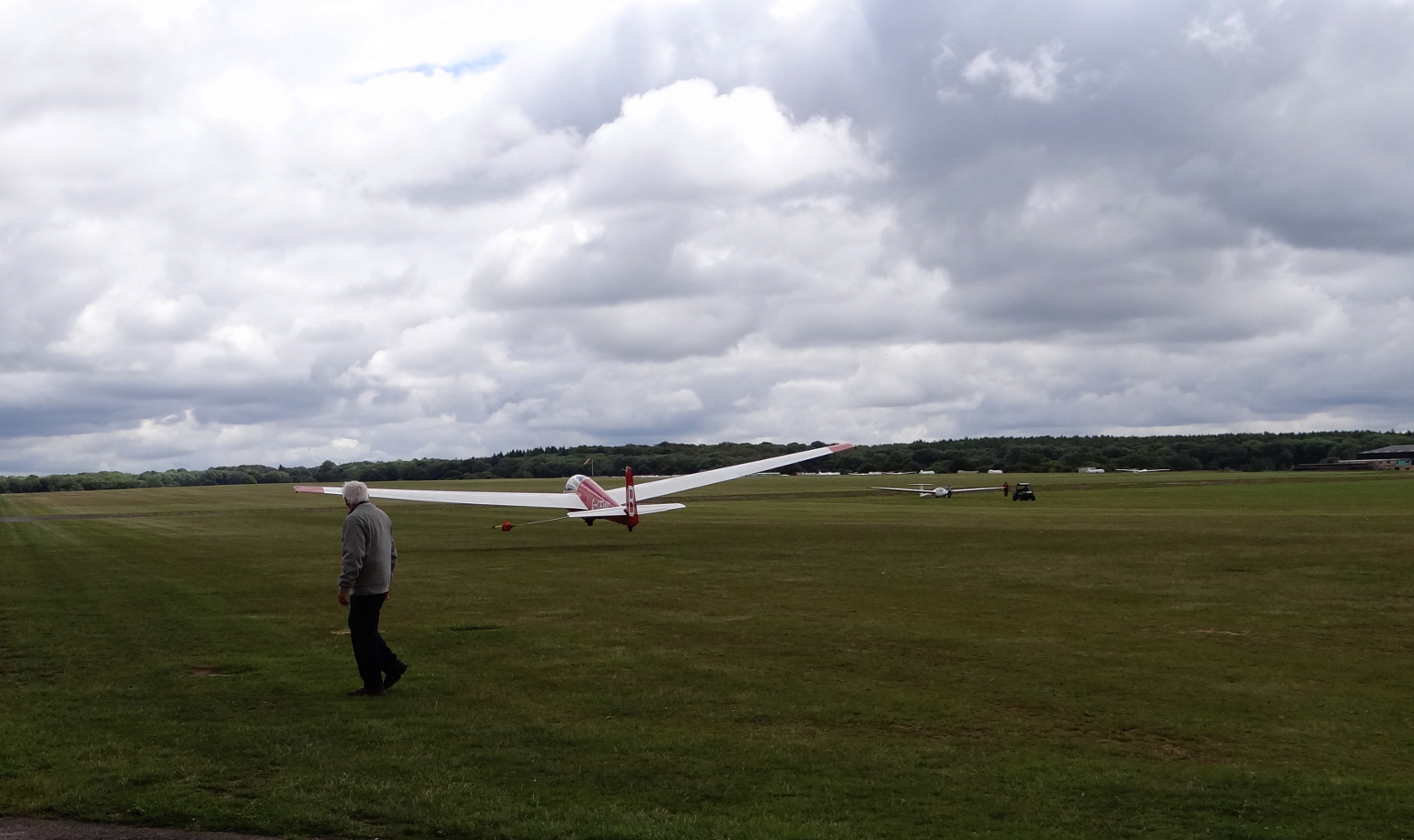
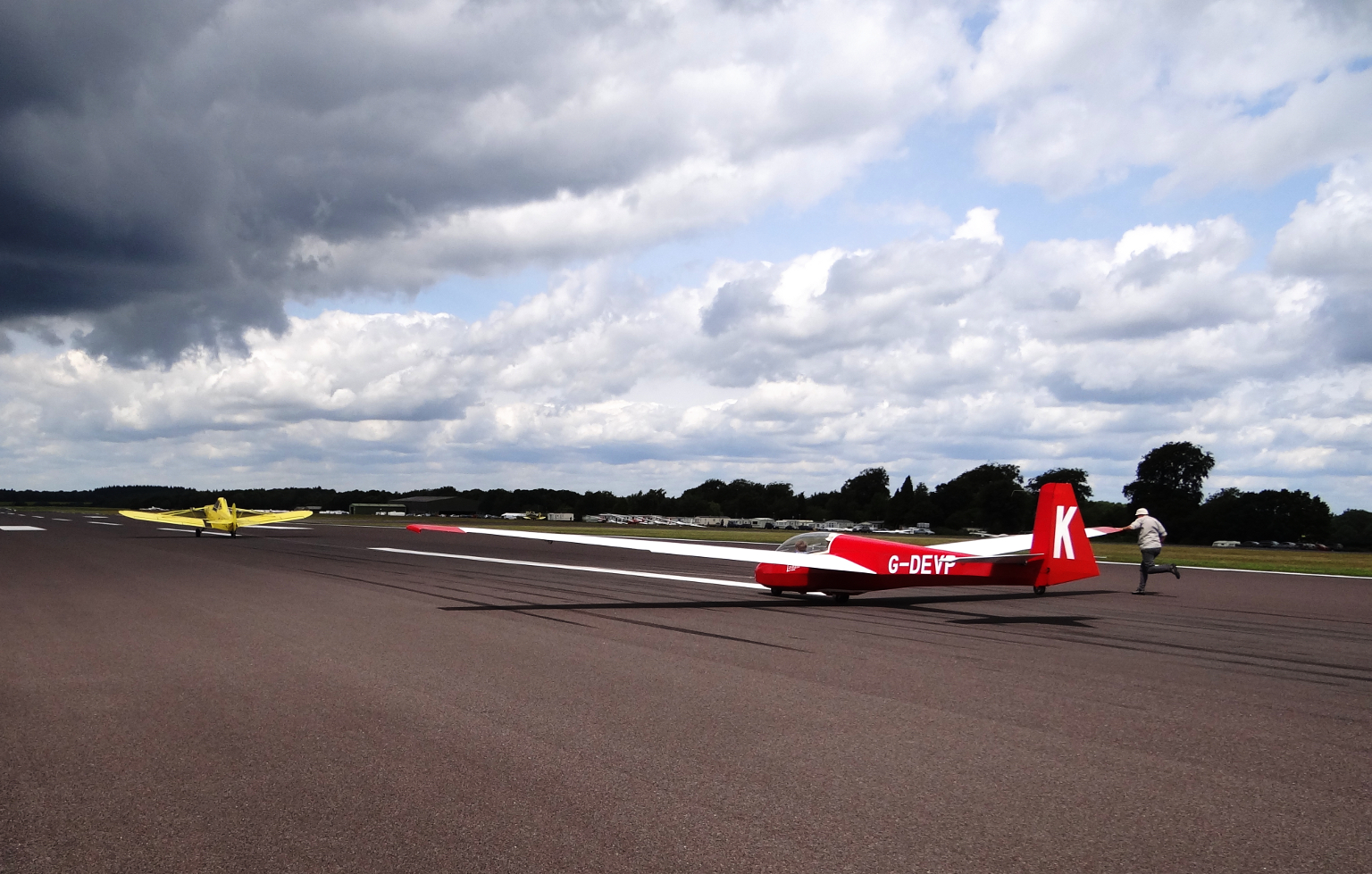
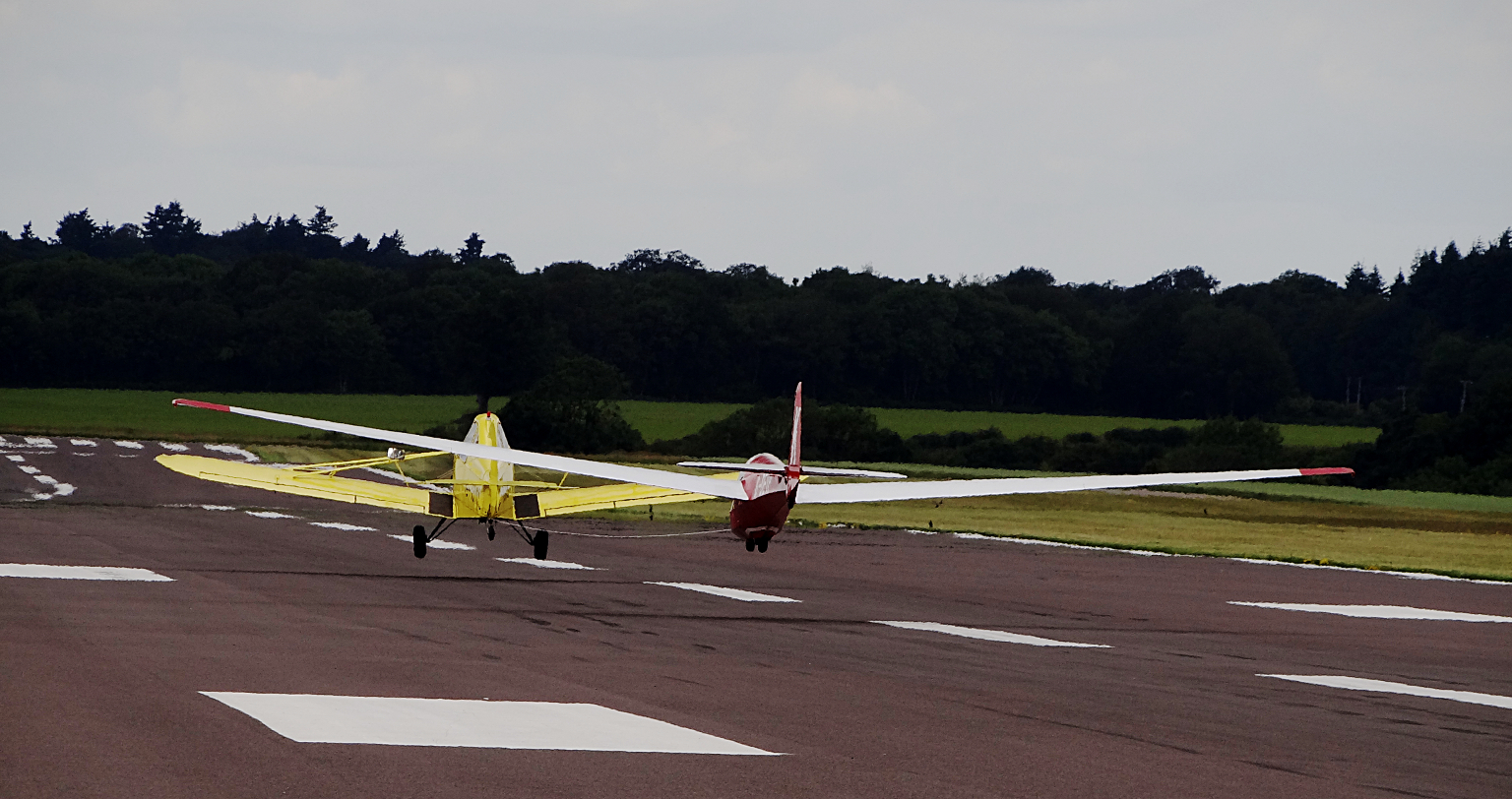
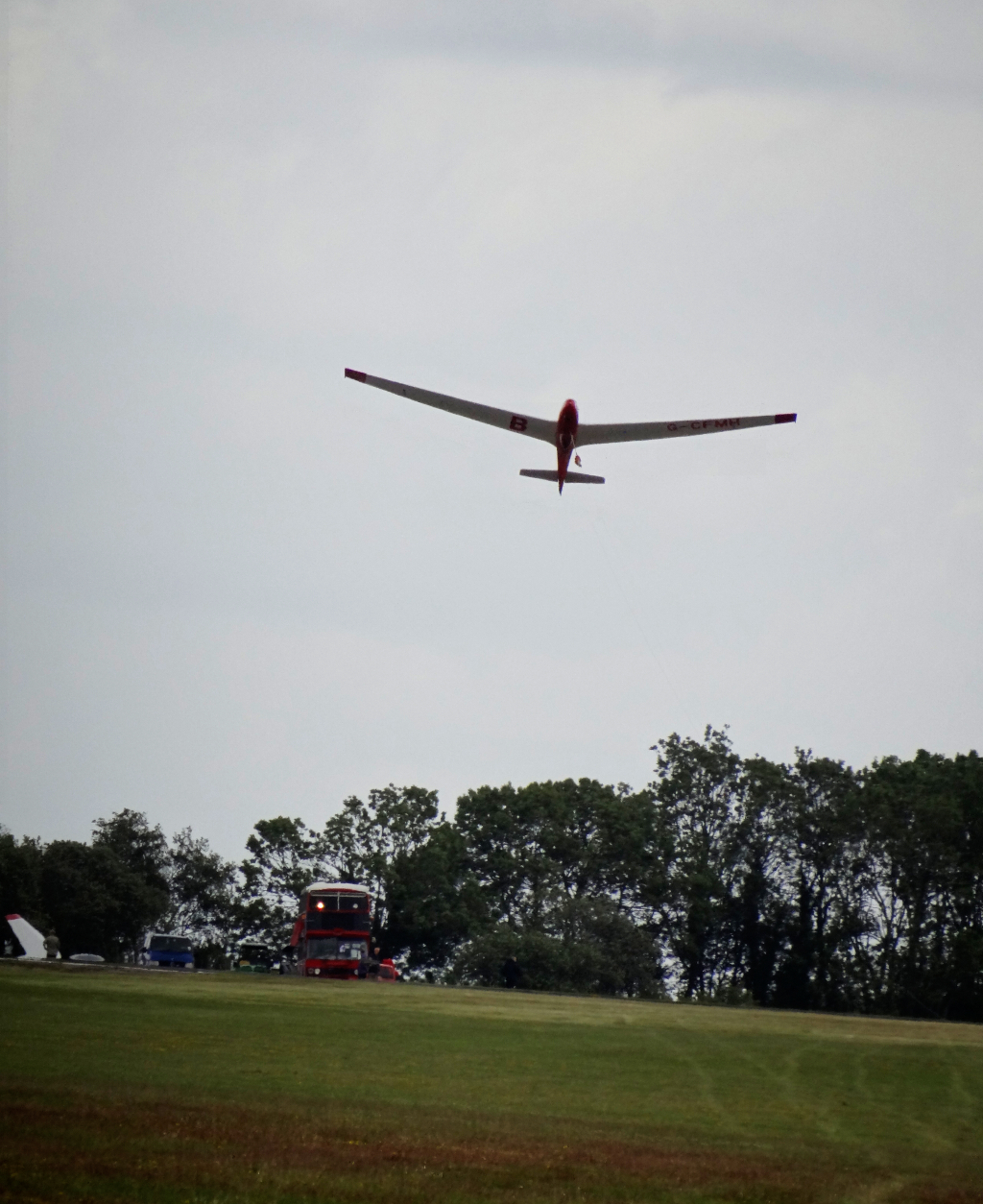
Vintage gliders being aerotowed ready for the flypast.

The daytime group winch launching gradually subsided, allowing the youth group to take over the evening launch point. Then later it was time to orchestrate the vintage glider memorial flypast.

This involved 4 tug aircraft launching 4 vintage gliders and performing an aerotowed flypast followed by the gliders releasing and landing in pairs. Vintage gliders tend to fly slower than their modern counterparts and thus have a very graceful bearing. I also admit to having a soft spot for the beautiful gull wing shapes.

The flypast was followed by an aerobatic glider display and then Gary flew the Primary to end the day of memorable and memorial vintage gliding fun.

Tug landing after the aerotowed flypast.

Super Cub Tug landing into the sunset.

The beautiful Petrel coming into land after the flypast.

The Steinadler catching the evening sun as it turns finals.

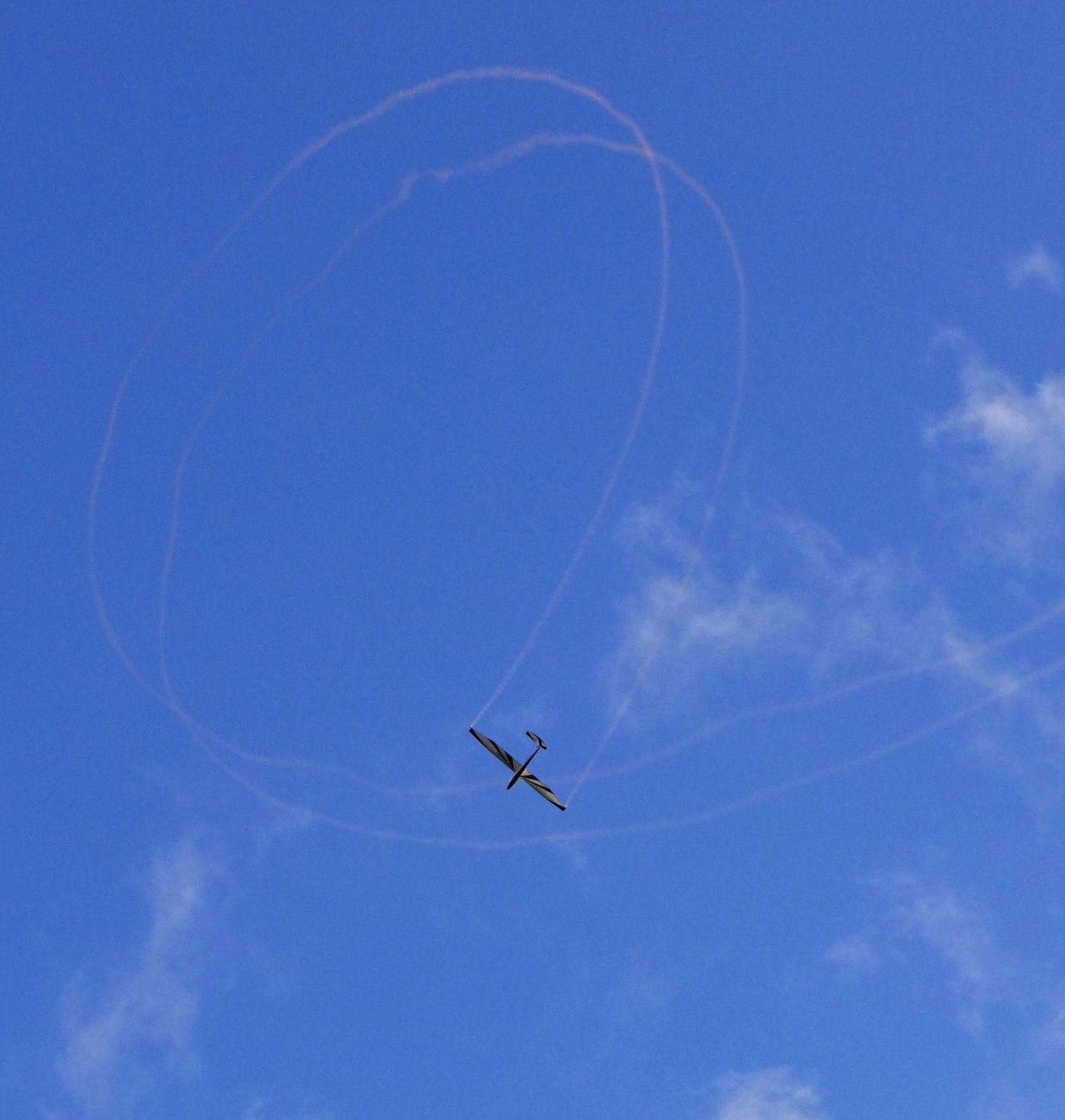
A perfectly executed loop.

Gary on approach in the Primary, subsequently heard to shout "I need a buggy!".

So after Gary and the Primary were retrieved the youngsters finished the last flying of the evening, put the gliders to bed in the hangar and retired to the clubhouse for logbook signing, eating and drinking before returning home.

Once again a fantastic, wonderful and beautiful evening that will be remembered by all for a long time to come.

See you soon…

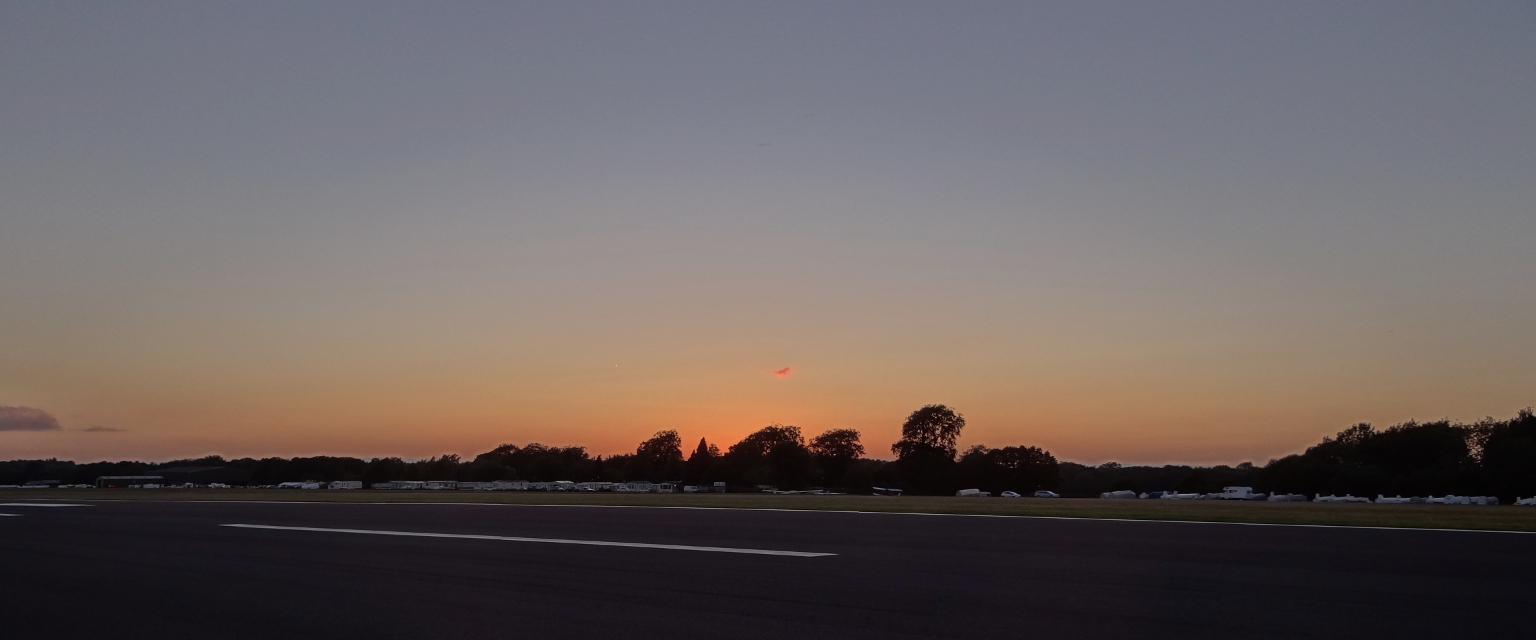
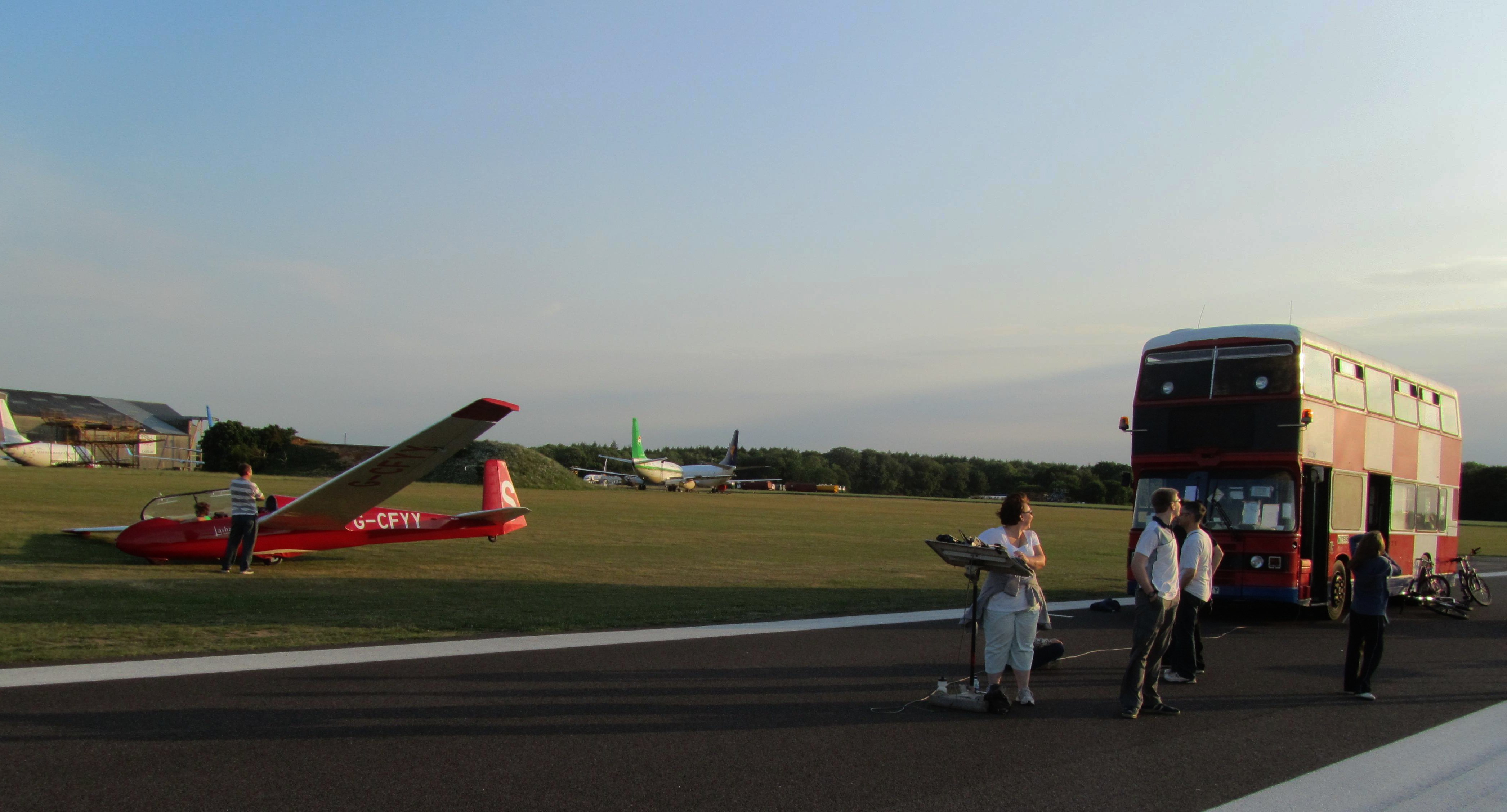
The last light of the day, just before driving the launch point bus back to the hangar.

A Grand Prix Day Out

I have recently witnessed a true spectacle and Grand Day Out – with apologies to Nick Park.

I was lucky to see the British Formula 1 Grand Prix at Silverstone, followed by a reflective evening thinking more about the relationship between the human and machine sides of the whole car racing spectacle.

The company I work for has been sponsoring the Formula 1 Virgin Racing Team this year and I luckily got one of the tickets for the British GP on Sunday, care of Virgin hospitality. It was also a day to see what my new camera could do!

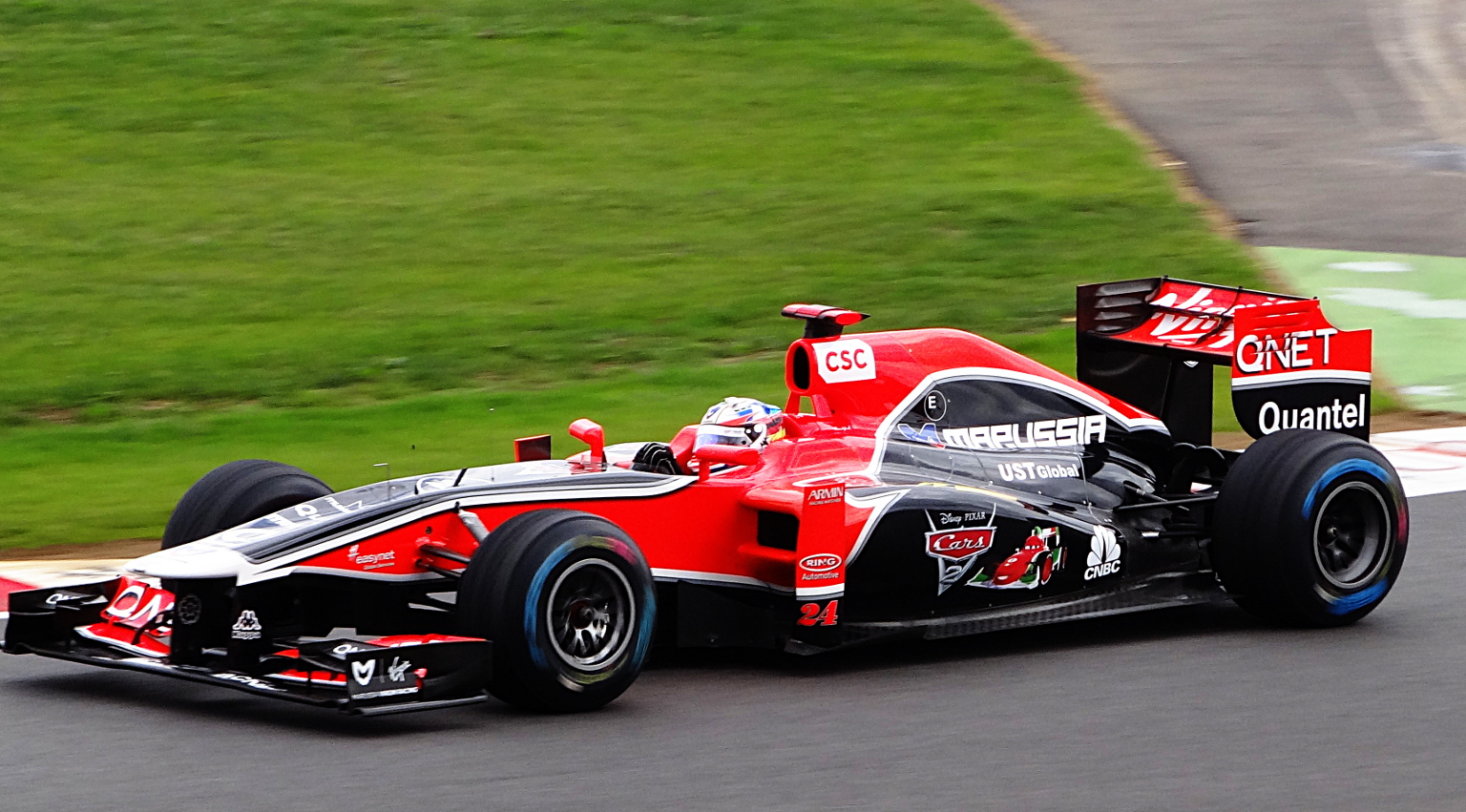
Timo Glock of the Virgin Racing Team. Tricky to get the shot with my digital camera due to button delay. Only just got the front of the car.

I must first confess that I am not a die-hard F1 fan. Like many others I have watched it on TV, but have never gone to see it in the flesh. The last time I saw any motor racing was when I went to see some karting race day at Blackbushe, having raced karts there myself in the late 1980s.

At Silverstone I was mainly struck initially by the friendly crowd atmosphere at the track. It seems that the british fans have a special family feeling to the sport. And during the race when the british drivers go by the atmosphere is particularly electric. Though normally a fairly pensive sort I, like others, definitely got carried away by Lewis Hamilton’s progress throughout the race, and at certain points found myself jumping to my feet and shouting myself hoarse as the whole crowd rose to cheer him along. Crowdthink perhaps, but harmless enough in this case and quite a fantastic feeling.

Lewis Hamilton blasting past after the rain had stopped.


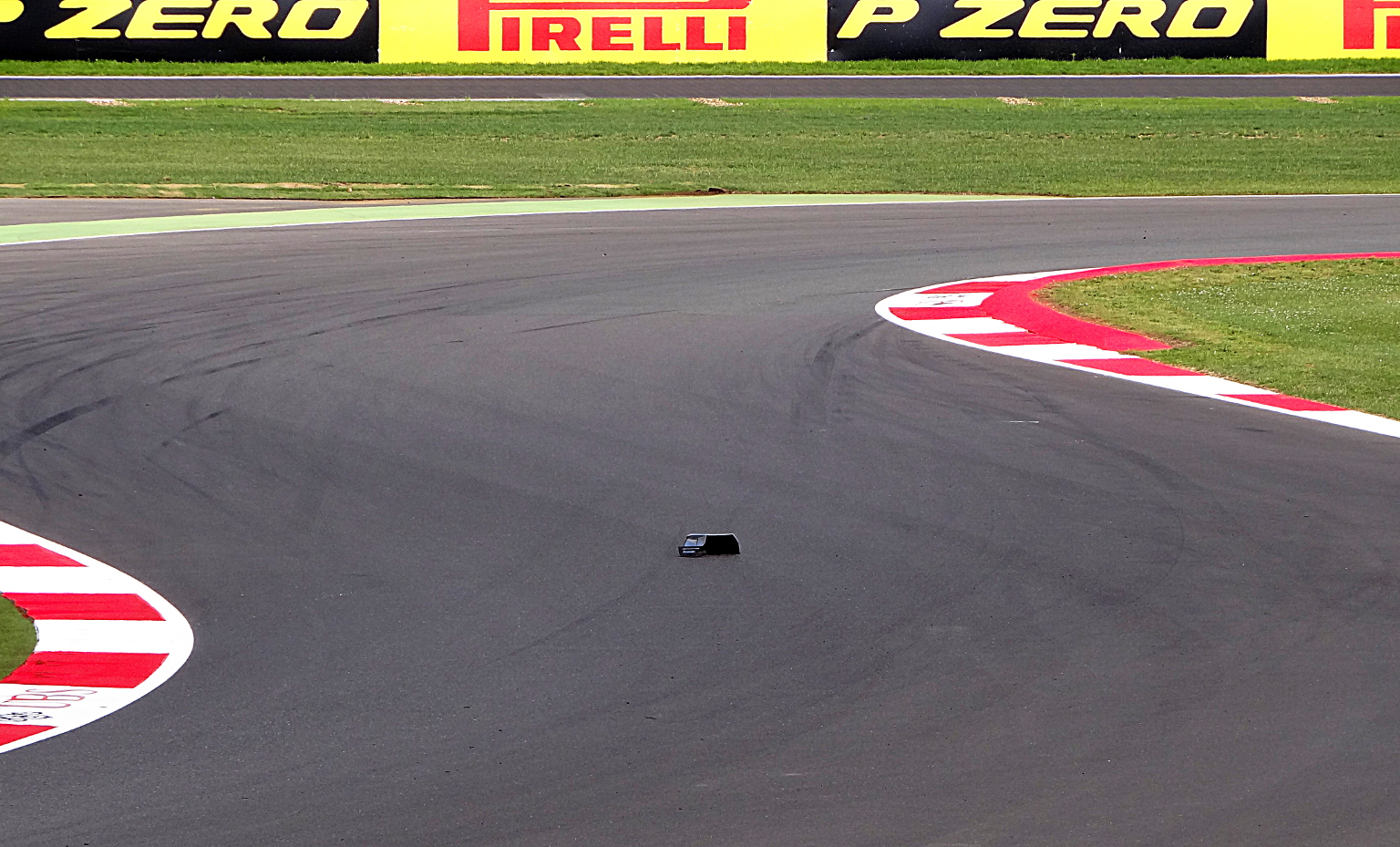
I was in the “Club A” stand which gave us a direct view of the final tussle between Hamiton and Massa for 4th place at Club Corner. Everyone in the surrounding 3 or 4 stands were on their feet as Hamilton managed to fight his way back to keep 4th place. Hence the following seemingly silly photo of a bit of his car left on the track after the contact between them.

OK OK. A gratuitously silly picture of part of Hamilton's car on the track after the bump with Massa.


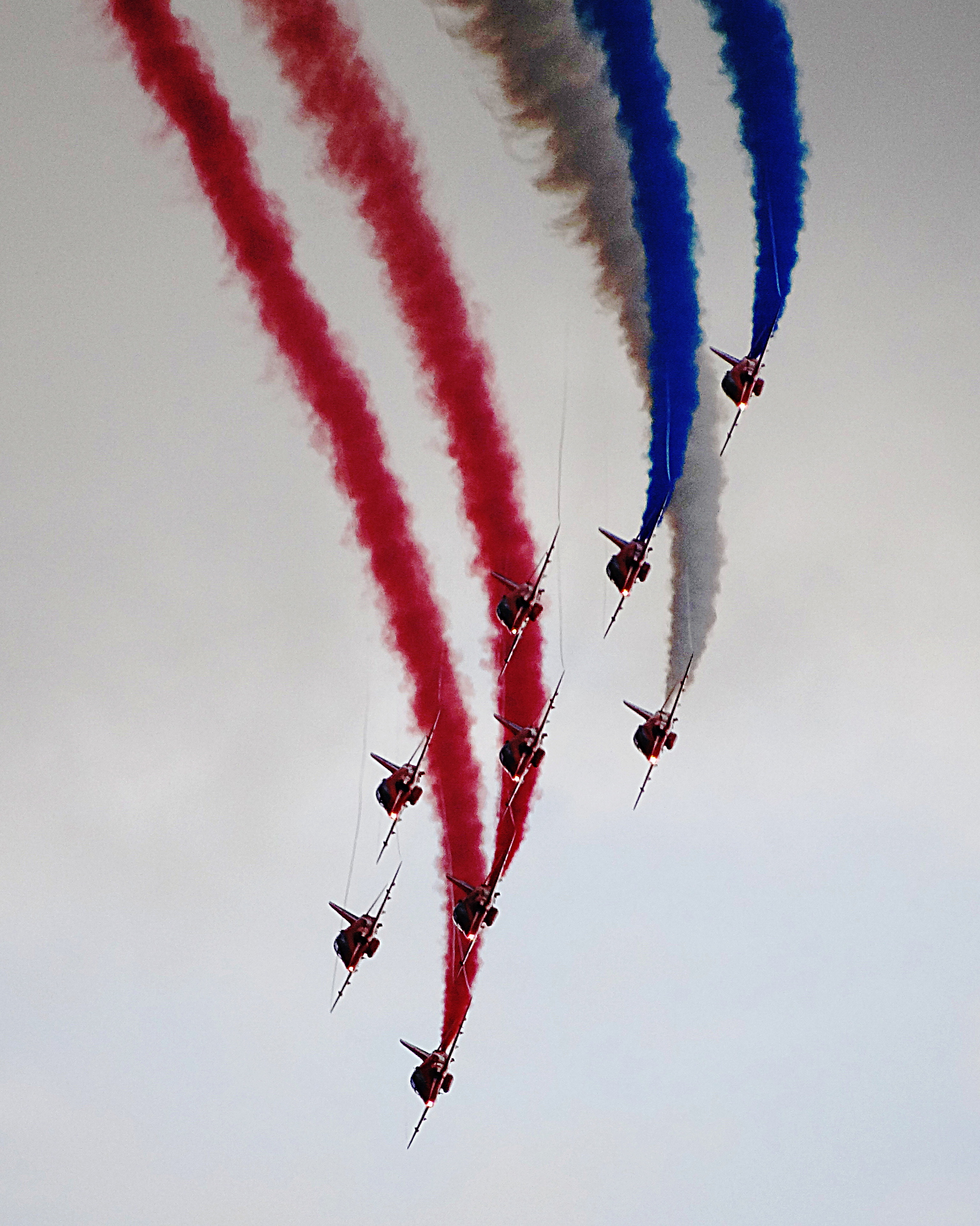
Before the race a great display, as ever, by the Red Arrows brought a further element of British Pride to the proceedings. I even managed to get a half decent shot of them.

A lucky shot of the fantastic Red Arrows with landing lights on but no undercarriage down!


So what were my reflective thoughts? In the evening the Virgin hospitality was very good and extended to having a viewing of the film “Senna”, which prompted my gray matter to mull over a number of points.

Firstly, it seemed to me that the brazilian driver drove from a place that was strongly human, and it made me think about Lewis Hamilton. Though such comparisons are odious, I do think there is a similarity in their styles which explains why they could draw such a response from the crowd. My best word for it is that Senna drove, and Hamilton drives – from the HEART. Despite all the surrounding amazing technology, their humanity is visible in their driving style. I believe this can be said about other drivers too – but I am relating to these two drivers in particular.

Both had their origins in kart racing. Hamilton, like Senna, has an aggressive style of driving which I believe shows his passion to win. This style can give problems sometimes – for instance I can see Hamilton struggling with the current Formula 1 tyre regime. I thought this was noticeable this weekend when Vettel was attempting to get past Hamilton. Vettel didn’t get past and came in early to get a tyre change. Was this possibly because he was having to drive more aggressively at such close quarters to match Hamilton? Only he knows.

However, back to my main focus. I found that this situation of driver passion and mastery related to some of my thoughts about the interaction between the human being and the technology.

As I have noted before: The technology amplifies our capabilities. Thus it requires more skill, judgement and mastery. Any small mistake is amplified into a big mistake, and particularly so in motor racing. The technology can also mask and eclipse the human being behind it.

Yet here we witness these sportsmen mastering the technology, but more importantly, in this mastering of the are mastering themselves. It is this all too human struggle that is so compelling, especially when they succeed, and especially if we can see and feel the struggle with them. In this case Hamilton’s drive from 10th position on the grid to 4th or 5th, and in the rain, was just elating. No other word for it. I must also mention that Button also drove really well until having an abortive pit stop.

I wish all the drivers a safe battle with their opponents, and also, a constructive struggle with themselves.

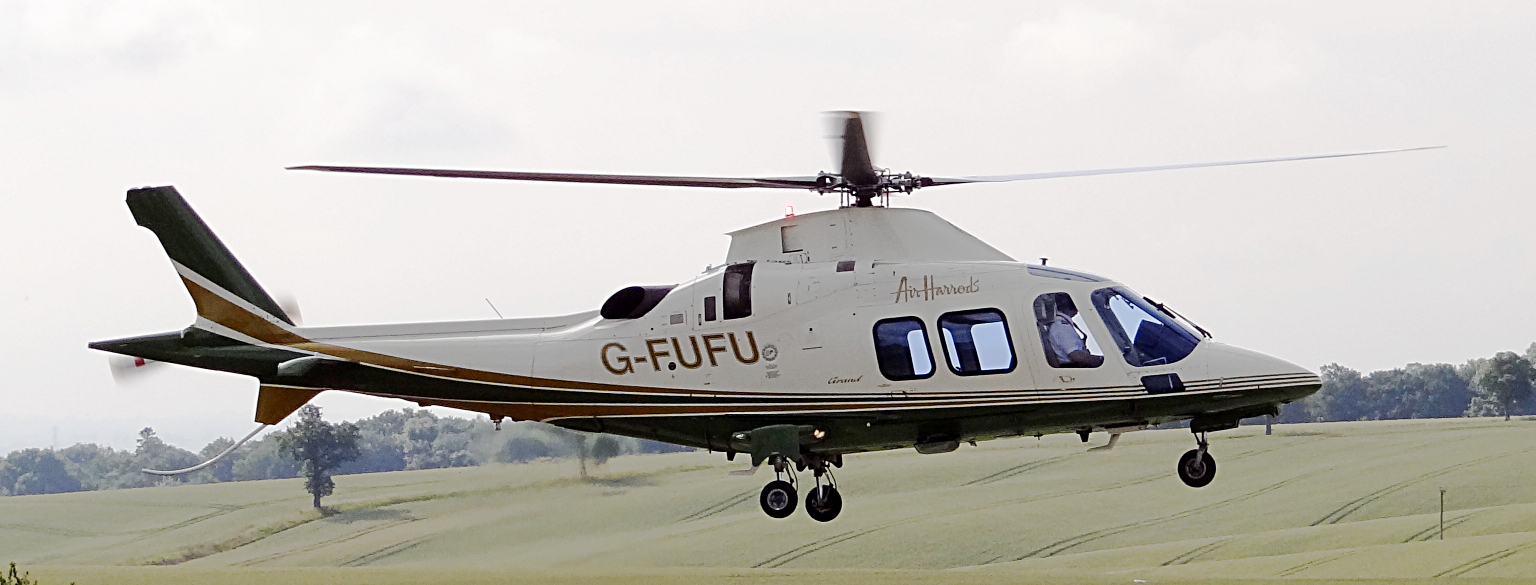
Too many VIPs. There was an almost constant and noisy stream of helicopters coming in and out through the whole day.

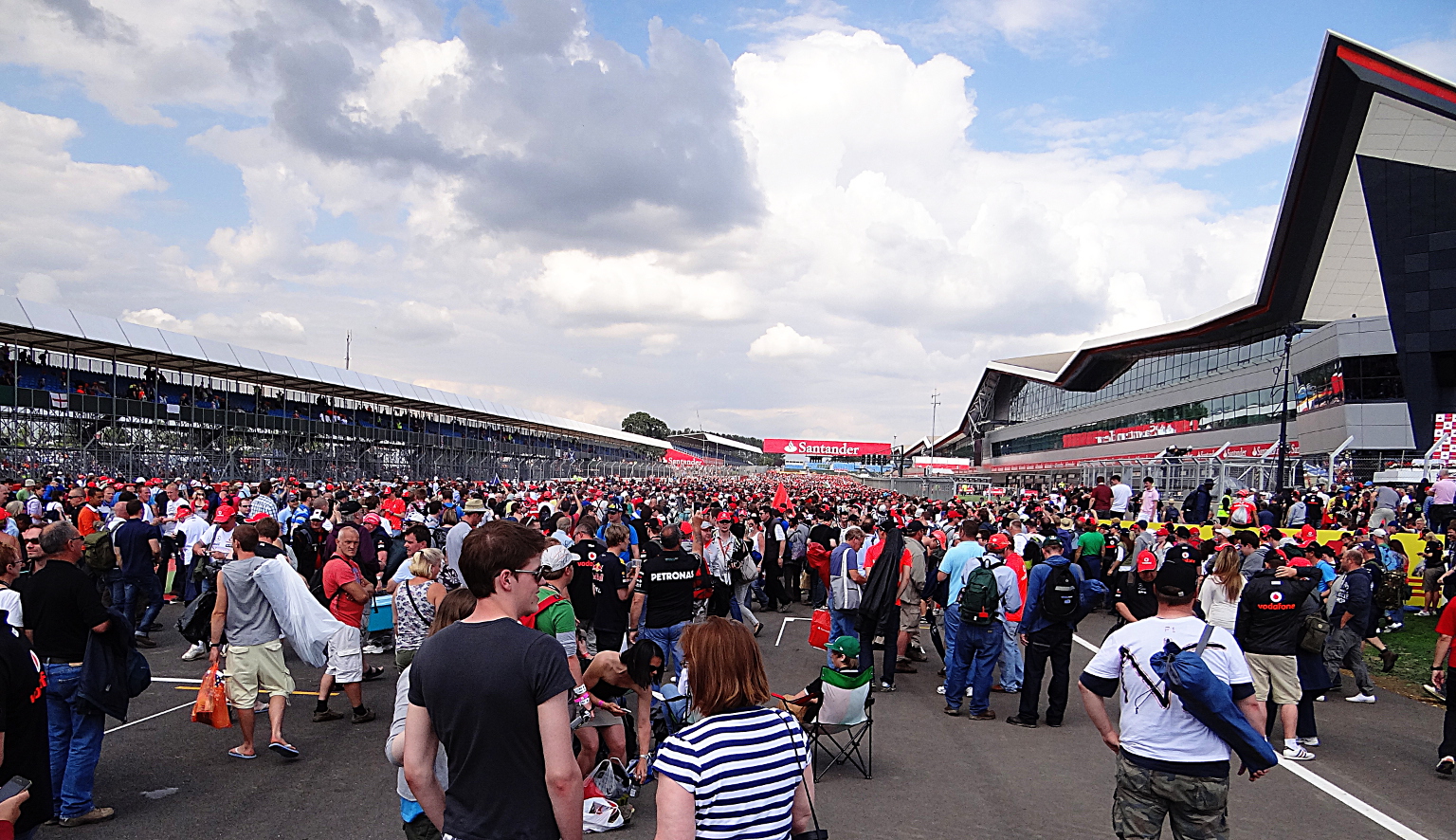
The fans in their Sunday best on the track after the race. There were at least 100,000 people at the GP. Not all countries get people on the track afterwards.

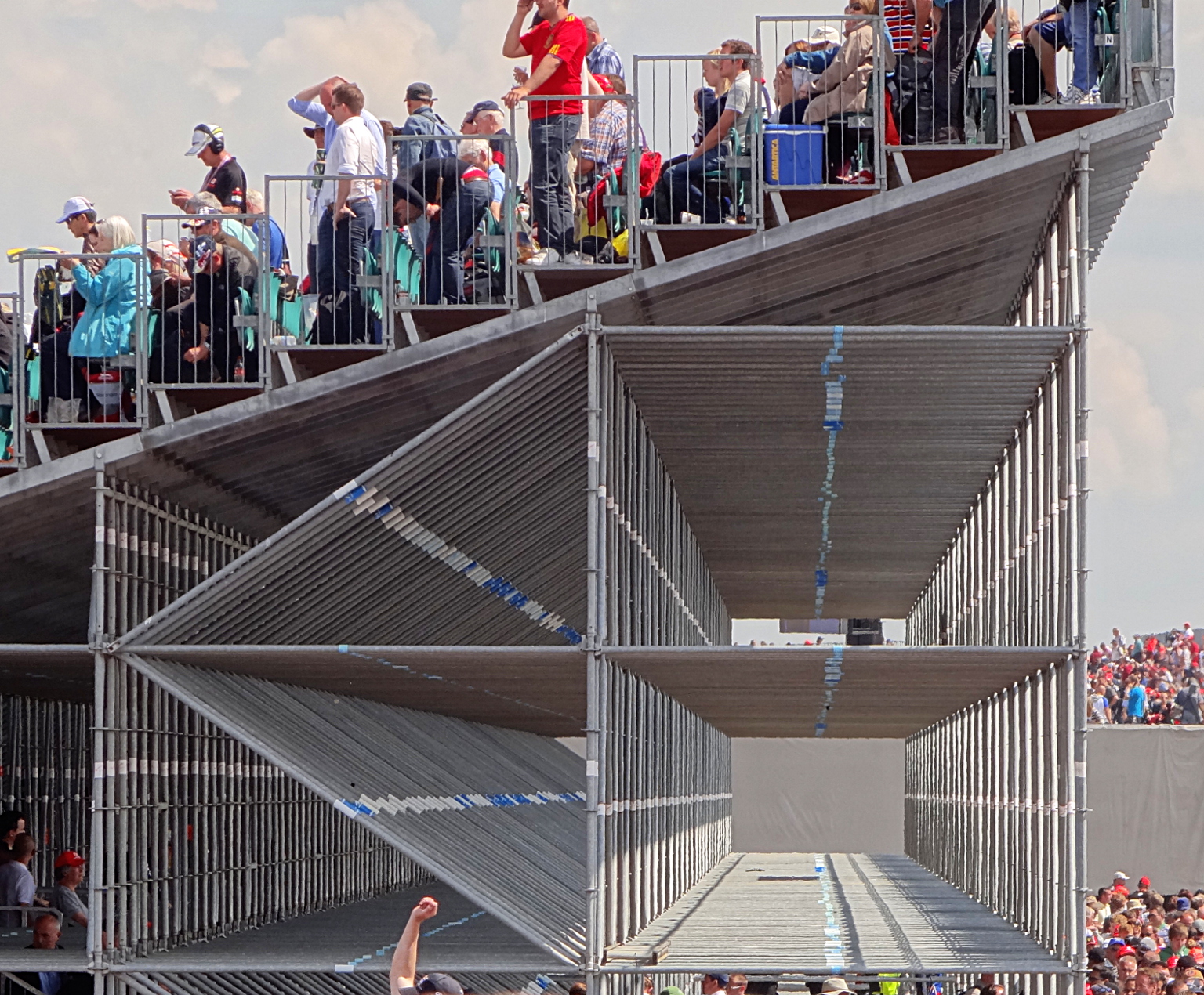
Charles trying to get all arty farty with his photography of the side of the stand.

GLIDER CHRONICLES 2011 – June 20th : Solo to Bronze

June 20th to 24th has been holiday for me at Lasham where I decided to enroll on a week-long course called “Solo to Bronze”.

The “Bronze” in the title refers to the British Gliding Association Bronze Badge which means that (a) If conditions are suitable I do not need to be checked out every day by an instructor before going solo; and (b) I can start thinking about going cross country, once the crops have been harvested – more on that later. Getting a bronze suntan is optional and depends upon the weather.

The training required to get to Bronze is part of the Lasham Red Card syllabus. The Red Card goes further to include the BGA Cross-Country Endorsement plus some extra training. Great! It was only on the Monday morning I found out that actually the Solo to Bronze course is more of an extended flying check, i.e. the skills test and exam for the Bronze. Just as well I have been doing that soaring in the previous weeks since I had not consciously got myself ready for this. No pressure then. Although John and Ed, our instructors, said they would obviously be tailoring the training to our individual skill levels.

[UPDATE: The actual badge arrived in the post on 22nd July. Scroll to the bottom for pic. I can now wear the badge and indulge in the special handshake!]

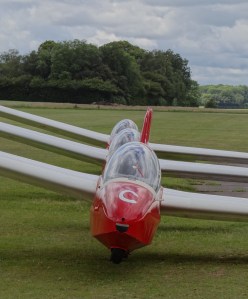
Three K13s in a row ready for the first day's flying.

DAY 1: Mon 20th June:
Conditions: Overcast. Moderate to Strong crosswind from the south-east.

The first day dawned overcast and moderately windy. A perfect day for a red card course! You can see why from some of the initial red card items that need signing off:

Lesson 38: Circuit Planning & Landing Revision.
a) Strong winds (RED SOCK) including self briefing.
b) Observed solo spot landing +/- 40m.
c) Side-slip approaches.

Lesson 39: Aerotow and Winch Revision
a) Aerotow signals
b) Solo on aerotow
c) Descent on tow
d) Winch – strong winds (RED SOCK)
e) Winch – launch failures – short field

Lesson 40: Stall and Spin Revision
a) Spin recovery after full turn on predetermined heading
b) Spin from failed winch launch
c) Spin entry from steep turns
d) Observed solo spin and recovery

Lesson 41: Thermal Soaring
a) Efficient centring
b) Joining crowded thermals

So John - Do I have to wear the silly hat? Well Bill, only if you want to be a REAL glider pilot like that guy.

John and Bill got to grips with discussing the merits of wearing silly looking hats! Sorry John, just joking, mine looks just as bad. In the end poor old Bill got a cold and only flew for 2 days of the week.

My first flight of the day went fairly well. We managed to find some lift and thermalled with another glider, then did a spot(-ish) landing.

On the next flight I managed to mess up a supposedly short-field cable-break. This was an exercise to simulate having a cable-break at an airfield smaller than Lasham.

I got so bothered about making sure I was going to land inside the notional short field boundary that after the simulated cable break – initiated by John releasing the cable from the back – I did not wait for the speed to build up. – This is a cardinal sin!

Of course John caught my mistake at which point I had a neural short circuit about having made such a booboo and due to brain overload decided to land straight ahead anyway. Plenty of room at Lasham, but it was in the field next door to the make-believe short airfield. For my sins I was invited to “share” it with the other folks on the course during the end-of-day debriefing and noticed a number of knowing smiles on the faces of the instructors.
Bill and John get launched after waiting for the K21 to return far enough from its "cable break walk".

OK – I know in my head that as you are learning new skills your previously learnt ones can disappear for a short while. But to have made such a mistake. I suppose this will happen when turning head knowledge into practical wisdom – but why do I have to feel like a twerp to do it? Well I guess the point is that at least I won’t forget it in a hurry.

Instructor Notes:
Satisfactory good landing. Remember sequence: Lower nose, count speed to minimum then decision and action. Good winch launches and circuits.
Next: aerotow and spins.

Personal Notes:
– Count the increasing speed out loud when waiting for the it to increase after a cable-break.
– Thermalling technique of shifting the circle centre by using an elongated oval pattern.
– Greater than 40° bank and the wing lift reduces dramatically.
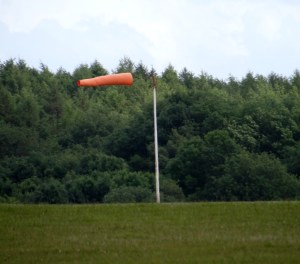
Strong winds as shown by the horizontal windsock.

DAY 2: Tue 21st June:
Conditions: Overcast. Strong crosswind from the south-west.

An even windier day on Tuesday. Time for some crosswind landings. These involved keeping the glider straight down the main runway while we had a crosswind from the south. Great fun! Although we would have liked a stronger crosswind.

The sun came out a bit later and there was some lift, though gusty, but we got blown downwind a fair way as we were climbing. Managed to get to 2000ft from 1300ft. On the second flight we got a great launch height of 2000ft despite being on a cross-runway which meant that the cable length used was shorter than normal. However though the clouds looked like there was lift we failed to connect. Shame.

Instructor Notes:
Mushing stalls, wing drop and stall speed increase in turn. Crosswind landing well handled. Spin of failed winch launch simulation and recovery on heading. Strong wind conditions. Next sideslips, solo spin and spot landing.

Personal Notes:
– Don’t get low speed on the top of the launch.
– Too fast signal – relax the pressure on the stick rather than lower the nose otherwise the speed increases even more.
– Keep the stick back when precipitating a spin – otherwise it can become a spiral dive.
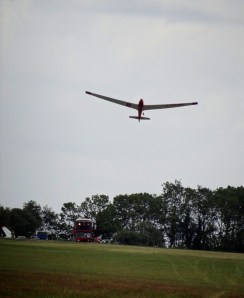
Winch launch beside one of the smaller cross-runways.

Explanation: Stalls, mushing and otherwise
Under normal circumstances, stalls are something you don’t want to happen. In normal flight the glider keeps flying because the air moves over the wings. If you slow down too much, there comes a point where the wings stop giving any lift and the glider or aeroplane falls out of the sky. This is definitely not a good idea if you were not doing it on purpose.

Thus a significant amount of training concentrates on how an aircraft stalls and doing them on purpose so that the trainee pilot learns to recognise the signs. Three possible types of stall are:

a) Mushing stall : Where the entry into the stall is a gradual decrease of speed so if you were not on the ball you might not notice it. You end up losing height rapidly but the nose of the aircraft stays where it is. A gradual stall without a nose drop.

b) Nose drop stall : This is much more noticeable and involves, as the name implies, having a sudden drop of the nose at the stall. It can show just how ineffectual the elevator becomes (i.e. the control that normally raises the nose – at the stall it doesn’t ) and how quiet it becomes due to reduced flying speed.

c) Wing drop stall : This occurs because one wing will stall just before the other and results in one wing falling before the other. The trouble is if you try and use the stick to lift the falling wing you have a problem – the dropped wing will have already stopped giving lift. You then want to the raise it? You mean you want the wing to give you more lift to raise it? This makes the situation worse and will cause it to stall even more deeply with other unwanted effects. You can only raise the dropped wing once the aircraft has been unstalled.

As an additional point – if only one wing stalls this becomes a spin and the aircraft can move in all 3 axes at once, i.e. Pitch (nose up/down), Roll and Yaw (movement of the glider left or right). Yes – We also do spins intentionally during training and in this course must do one solo, being observed from the ground.
Someone was actually flying in this! It was the last flight though.

DAY 3: Wed 22nd June:
Conditions: Overcast. Rain. Strong wind from the south-west.

The pilots on the “Solo to Bronze” course did not fly initially, but some brave – or optimistic – souls were flying as you can see from the photo, though not for long. After this photo was taken it really started pouring rain and so it was an Exam Day! I had spent the previous 2 nights blitz revising from the recommended text “Bronze & Beyond” by John McCullagh. I managed to do well in the exams and got most of the paperwork for the soaring flights signed off as well. Luckily the background training from my powered SLMG (self Launching Motor Glider) NPPL helped with the revision.

Unfortunately I ended up getting a headache in the afternoon and so went home early. Apparently it cleared up later and some flying was done, though by the sounds of it it was mainly cable-break practice.
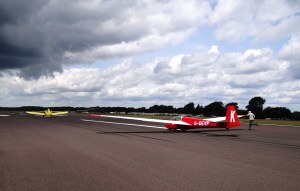
Aerotow launch initial run.

DAY 4: Thu 23rd June:
Conditions: Sunny with moderate but slightly gusty wind from the north-west

A busy day for me. Aerotow check, solo spin and spot landing in the morning. Field landing exercise in the afternoon.

First flight of the day was in thermic conditions, i.e. fairly turbulent, and was an action packed aerotow with the following exercises:
– Boxing the tow : see my description in this post.
– Descent on tow : involving use of airbrakes as soon as you see the tug go below the horizon.
– Close Airbrake Signal : waiting for the tug aircraft to quickly waggle its rudder – this being the signal to tell me to close my airbrakes.
– Release Tow Signal : waiting for the tug to rock its wings, at which point I had to release the tow rope.
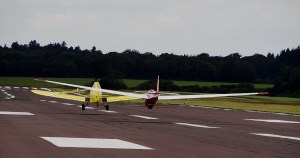
Aerotow launch airborne.

This was incredibly hard work. I could tell in the initial stages of the tow that I was in for an interesting time since it was hard just to maintain position behind the tug, requiring some very strong control inputs. The boxing tow exercise was then even harder!

Once released from tow it was time for spins. But this time recovering onto specific headings. Hmmm. The recoveries were fine, but coming out on the right heading needs some practice.

After that it was time for sideslips. The practice ones in mid-flight were not as good as they could have been. My excuse? The thermic conditions. Mainly because when I did it for real on the approach, it all went fine. John had to remind me to get in really close to the airfield though for the final run so we started up at 1000ft just a hundred yards or so it seemed downwind of the perimeter of the airfield. By using full airbrake and sideslipping in we came down like a brick and I managed to nail the speed just right as we came out of the sideslip. Bang on 60 knots. Thank goodness for that! I at least managed to get something right.

On getting out of the glider my shirt was completely wet with perspiration! But no rest for the wicked because for the next flight it was time to go off and do a solo spin followed by a spot landing, to within 40 metres of the front of the launchpoint bus. To be honest, that was not too hard after that first flight.

After all that it was nice to be able to relax a bit and just help at the launch point, hooking on cables and retrieving gliders. Bliss!

Personal Notes (morning):
– solo spin and spot landing
– full aerotow signals plus descent on tow plus boxing the wake –hard work
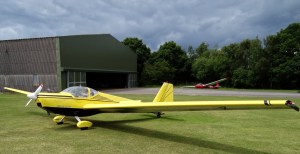
Falke ready and waiting.

Well, that was the morning, but the afternoon was destined to be just as hard since it was time to have a practice field landing exercise which meant getting out the Falke motorglider. Although I have my NPPL licence to fly this, I would be pretending it was a glider. The idea was to climb to 2000 ft, then bring the engine back to idle while doing a field landing practice approach. Then we would climb away again to fly a bit further for the next practice.

At the time of this exercise, practically all the fields had full grown crop. This is why ab-initio cross-country wannabees like myself are not allowed to fly between mid-June and mid-July until enough crops have been harvested. By that time the pilot has a half-decent chance of finding a suitable landing field, should the need arise.

Personal Notes (afternoon):
Field landing exercise:
a: Fly downwind to cover the most ground when searching for a field.
b: Pick a field big enough.
c: Avoid rapeseed, linseed and waving crop.
d: Don’t be afraid to land in a crop if nothing else is available.
e: Don’t fixate on the chosen field if another better alternative presents itself.
f: Fly the circuit as though at Lasham – imagine two or three fields to be the full the landing area the size of Lasham.

DAY 5: Fri 24th June:
Conditions: Sunny with moderate wind from the west

Unfortunately on Friday John, one of our instructors, came down with a cold he got from Bill. Obviously making comments about silly hats is harmful to your health! He made a quick appearance in the morning to sign of what he had covered on our red cards and returned back to get some well-deserved rest. A big thank you to John for all his hard work. A big thank you also to Ed for his hard work and picking up where John left off for my training.

Luckily I had only one thing remaining to sign off on my red card, the dreaded short field cable-break and consequent low-ish turn. It was also time to break out the single-seater Grob 102 Astirs to try a bit of soaring. We got all the gliders ready and over to the launchpoint, then Ed, the remaining instructor, got me into a K13 to try a short field exercise. As it turned out I found myself a lot more relaxed and it all went well. Possibly feeling a bit more confident after the hard work of the day before.

After that I managed to get around 2 hours single seater soaring before the approaching warm front stopped the sun reaching the ground and closed the lift down.

But now I had my Bronze items all signed off. All that was required was a countersignature from the CFI and to send it off to the BGA in the post. Yeehaa! I am now only a slightly more experienced pilot but still not yet ready for cross-country since I need my Red Card signed off and the crop fields to be harvested. All in good time.

In the meantime I shall be doing local soaring flights in the Baby Grob 102 Astirs to get up to the 10 hours needed before converting to fly the Discus single seaters.

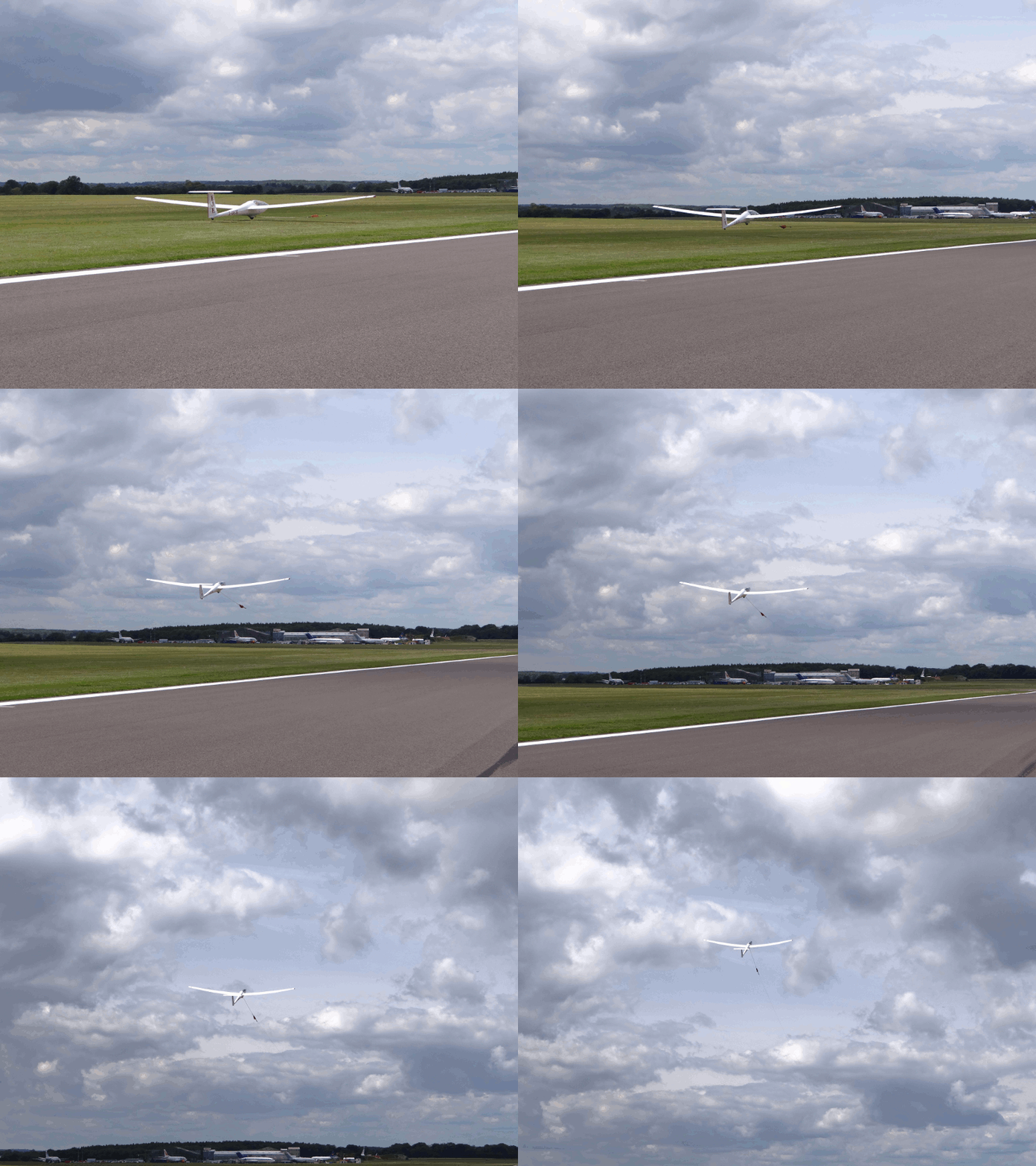
Anyway this been a long enough post, but I hope you have found it interesting. I leave you with a 10 shot picture of a winch launch. The pictures were taken at half second intervals so they should play back in about the same timing.
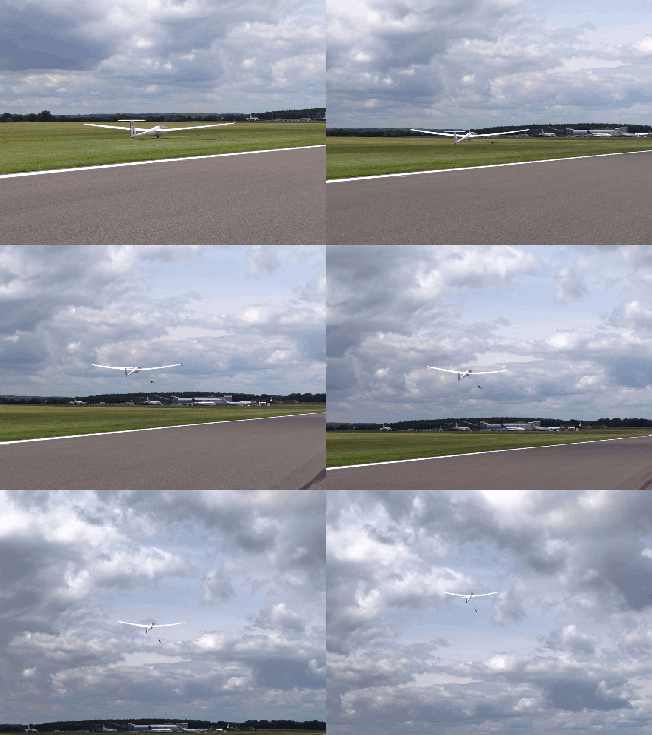
10 shots taken of a winch launch at half-second intervals.
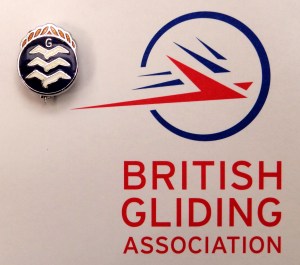


The Bronze Badge. Small but beautiful.

UPDATE on 22nd July: After getting all the signatures on the relevant form I eventually sent it off and got the badge back in the post. So for completeness here is a pic of said badge. All I have to do now is find out what the special handshake is to go with it!


Coming Next:
A report from the subsequent Saturday Lasham Youth evening which saw a flypast of some wonderfully restored graceful old-timer, sorry- Vintage, gliders.

GLIDER CHRONICLES 2011 – June 19th : White Card Flying Test

So – I was at the solo stage – I had received more training – I had all the items from the Lasham White Card syllabus signed off. What next? Well, it was time to have the White Card Test with the CFI (Chief Flying Instructor).

First a little explanation about the Lasham Card system. There are 4 card colours: White, Red, Yellow and Blue. The launchpoint bus raises a small windsock that indicates the conditions. Though there are only 3 windsock colours: White, Red and Yellow. A White Card will allow you to fly in “White Sock” conditions, i.e. when the white windsock is flying from the front of the launchpoint bus.

Below is an abbreviated description of the card meanings:

White is the first level after having reached solo stage. This allows you to fly without a check flight in White Sock conditions. Though you must still get a briefing from an instructor.
Red is equivalent to the British Gliding Association “Bronze Badge” plus a “Cross-Country Endorsement”, meaning you can fly cross country by yourself though only after being briefed by an instructor or CFI (Chief Flying Instructor). I shall describe this further on a subsequent post since there are other limitations.
Yellow is for stronger and nastier wind conditions, and you still need those cross-country briefings from an instructor.
Blue is the highest card rating and means you do not need to be briefed by an instructor before going cross-country.


An early winch launch into cloudy skies.

Sun 19th June: Conditions: Bright but overcast. Moderate wind from the west.

I put my name down on the flying list ready for the test, and then did some retrieving of the cables from the far end by the winch until the CFI was free. The test consisted of 2 flights with “The Man”, the second of which was, of course, a simulated cable break where I was taught a technique for dumping energy quickly as you will see from my personal notes. After a few questions about speeds and so on, he pronounced the verdict, saying that I had passed!

He then signed off the relevant section of the White Card and folded it up putting it into his pocket. Notice that getting a card rating at Lasham involves taking the card away! It is then kept in your records to prove that when you say you are “White Card” rated, you are not fibbing.

Personal notes:
– Dumping energy by opening full airbrake and putting nose down to 70kts. Works well with the K13 when you need to land ahead short.
– Be aware of the pitch-up tendency in strong winds due to the wind gradient. It means you will have to fly back down through the gradient if you get a cable break so keep it under control.
– Don’t forget about 55kts manoeuvring speed.

Instructor notes:
– White card flying test passed.

K13 being winch launched, shown here having just left the ground.

Diagram (not to scale) showing how the windspeed falls off closer to the ground.

Explanation of Wind-Gradient
Wind gradient is an important idea to understand since it has a big effect on a landing glider. Due to friction the windspeed at ground level will be less than the windspeed at height. (For meteorological purposes “surface” windspeeds are measured at 10 metres above the ground).

Before taking off you should decide upon your approach speed. If you do not approach fast enough then as the windspeed reduces closer to the ground, you will suddenly lose flying speed.

Taking the example in the diagram. If the glider starts its approach at 55 knots airspeed (too slow in the shown conditions) it will lose 15 knots of airspeed as it descends through the wind-gradient, even though the pilot has not changed the attitude of the glider. If it encounters a gust it can be even worse. The sudden reduction of airspeed can lead to a stall on approach, where it suddenly stops flying. Not what you want to happen!

So you must make sure that you set a high enough airspeed before you start your approach, because as you come down through the wind-gradient you will probably need to steadily lower the nose to maintain your airspeed at a safe level. This is a very disconcerting action for a human being since our instinct is to avoid the ground not point more towards it! For the K13 we are taught to use 50 knots plus half the estimated windspeed. Thus the approach speed for the conditions shown in the diagram should be 65 knots.

As you can imagine speed control is a hard thing to master but is really important at all phases of flight, and not just for glider pilots. Power pilots also need to master speed control.

Once the test was over I decided to take the Falke motorglider up for a short flight since the gliding conditions were not great. Of course it was purely an incidental consideration that I wanted to try out my new camera!

Falke ready and waiting.

RAF Odiham off the starboard wing Captain!


Coming soon: Getting the Bronze Badge.

GLIDER CHRONICLES 2011 – June 11th : A Single Seater Day

At last! I have been “converted” to the single seater “Baby” Grob 102 Astir.

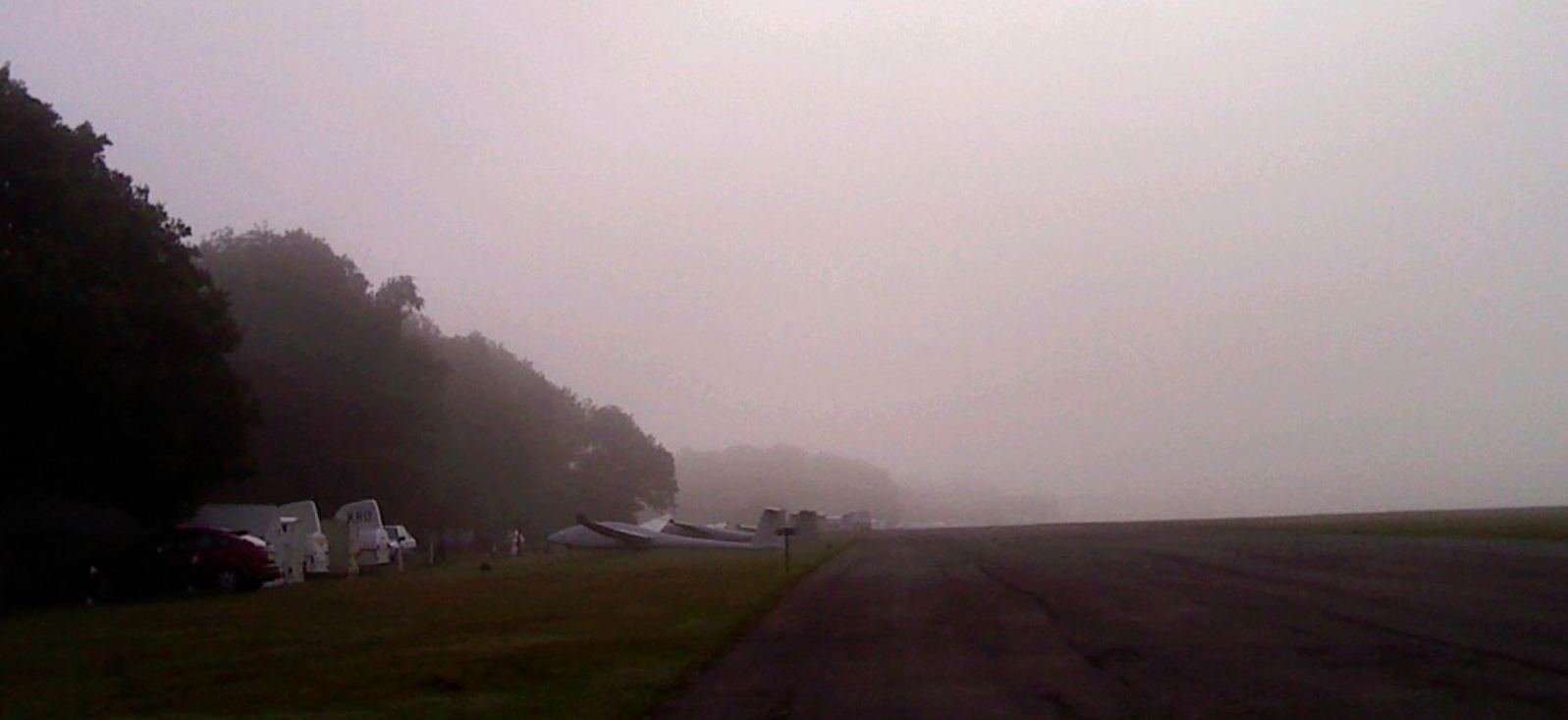
Due to the heavy rain and hail of the day before, combined with the morning sun warming the ground, it started out very misty as you can see from the following photo.

A misty, marsty Lasham morning at 8am.


[Apologies for the quality of the pictures. I was using my phone camera and forgot to switch it to high resolution. I am currently awaiting delivery of a better Sony HX100V camera but that is another story.]

The above shot encapsulates the wonderful feeling of the day still to come and this is why I love to hang around airfields, even in such weather. You can smell the history of its wartime role as a Mosquito bomber base.

After a full English breakfast we extracted the gliders from the main hangar and I had a thorough briefing from my instructor, Ingram, about performing the daily checks or DI (Daily Inspection) for the Astir. He was a mine of information about what to look for and special ADs (Airworthiness Directives) pertaining to the aircraft. All this had added authority because Ingram used to be a proud Astir owner.

With DI completed and the glider walked to the launch point, it was time for an aerotow check flight in a K21. It was not my best flight but was “satisfactory”.

Conditions
A gentle 10kts breeze from the west.

Instructor Notes:
Check aerotow satisfactory. Cleared for solo in G102.

The appropriate response to Ingram’s last sentence can only be: Yes!

Although the cockpit is looking the worse for wear.

The photo on the right is a reminder of the cockpit layout for the Astir.

The day was turning into fantastic flying weather and by 11am they began to launch the usual Saturday grid of approximately 30 gliders and the main club launch point had to wait its turn launching aircraft when it could. Luckily they spared one of the tug aircraft to come over and take me into what was fast becoming a crowded sky.

The passage of the previous day’s weather had left a cool air mass and the differential between this cold air and the warming effect of the sun caused a lot of rising air.

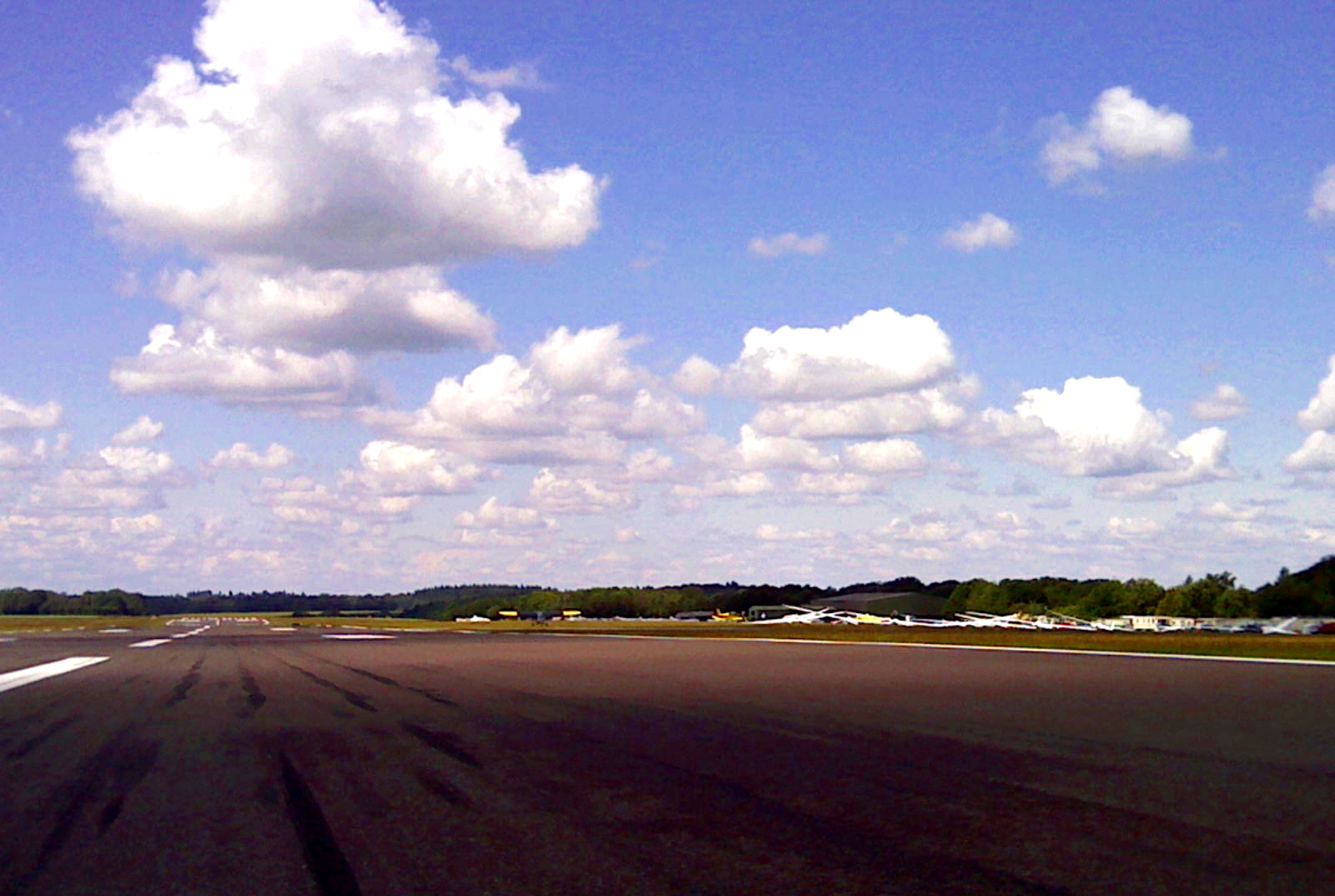
As you can see from the next photograph, that mist had now risen from its morning bed, becoming a wonderful fluffy cumulus sky as the temperatures rose.

This could be good. As a child I remember my daydreaming reveries about such weather when I used to read about gliding. And here I am, coming on 55, about to realise those boyhood dreams.

Could it get any better?

Waiting for the Aerotow. The day looks beautiful. More 'Fluffies'

After all the briefing about the aerotow differences it was a smooth launch and I didn’t do any PIO (Pilot Induced Oscillation) on take-off.

Once released from the aerotow it became clear that there was a significant difference in the way the glider reacted to the wind-currents compared to the 2 seater, although the handling was similar to the K21.

The best description I can find is that it is as close as you can get to having your own feathers. (Does that make this a tweet?!) Because it was lighter, it seemed that I could feel more gusts and get a better sense for what the air was doing.

I loved it and there were more shouts of joy from the cockpit!

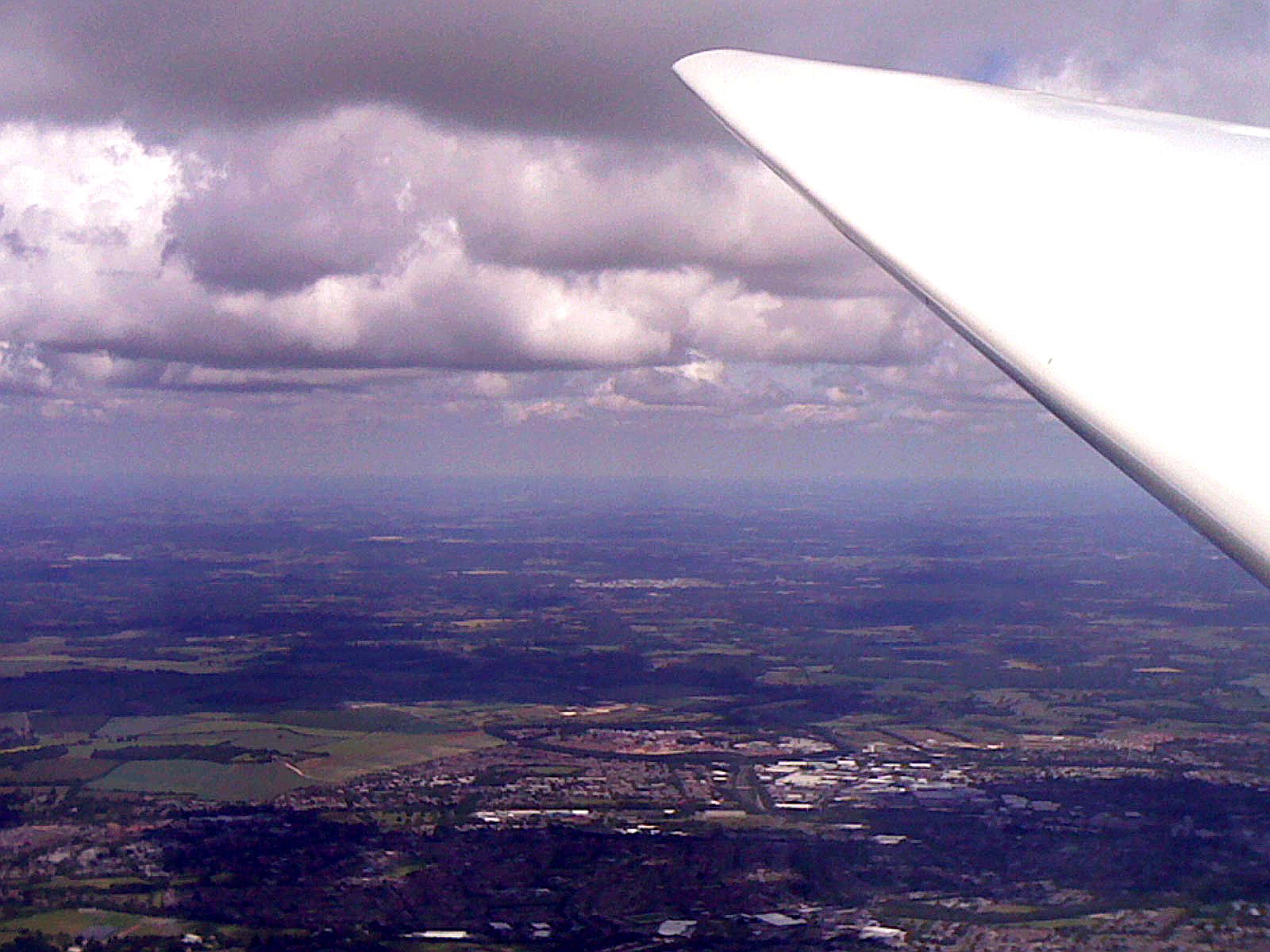
Looking to the north over Basingstoke.

Once airborne at that time of day it was not hard to stay aloft and my first flight lasted two and a half hours. In fact I only needed to land because of the call of nature! Looks like I will have to get a pee bottle if I continue to indulge in such long flights.

The Astir after the first flight. The main launch point, with both aerotow and winch, can be seen in the background.

The next launch was from the winch and I had a bit of a surprise as I came off the wire when I found myself close to a thermalling glider, although he was a bit higher. I immediately turned to fly through the thermal he was using as he cleared the area and found that the lift was quite strong.

Personally I don’t like hanging around the top of the launch area because you can expect another glider to be up to join you quite soon. So I zoomed away to the North side of the airfield and went to my favourite brown field – a known good thermal source – where I found a thermal and managed to climb away.

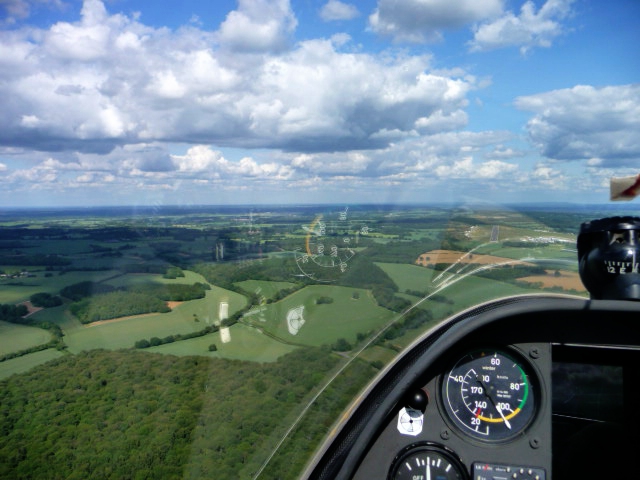
Once up to 3000 feet it became easier again and I managed to do more triangular circuits from Alton to Basingstoke and little towards Popham. Currently I must not go too far since I am not cleared for cross-country gliding and so the rule is to stay within gliding range of the airfield.

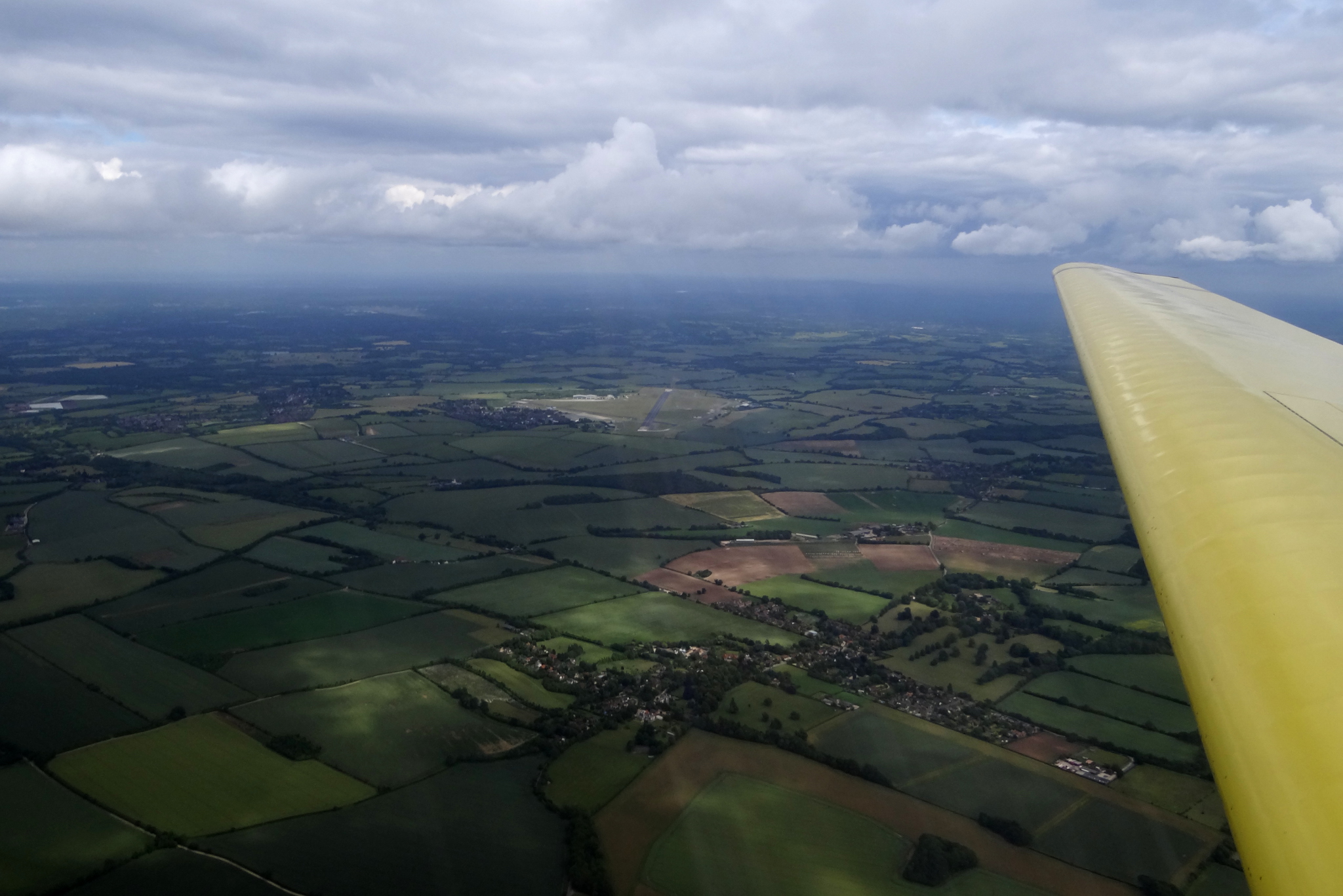
The following two shots are of Lasham and Popham. At Popham I was as high as I could go (minus an extra 300 feet safety margin) without getting into controlled airspace.

Explanation : AGL, AMSL.
AGL stands for “Above Ground Level”. AMSL stands for “Above Mean Sea Level”.


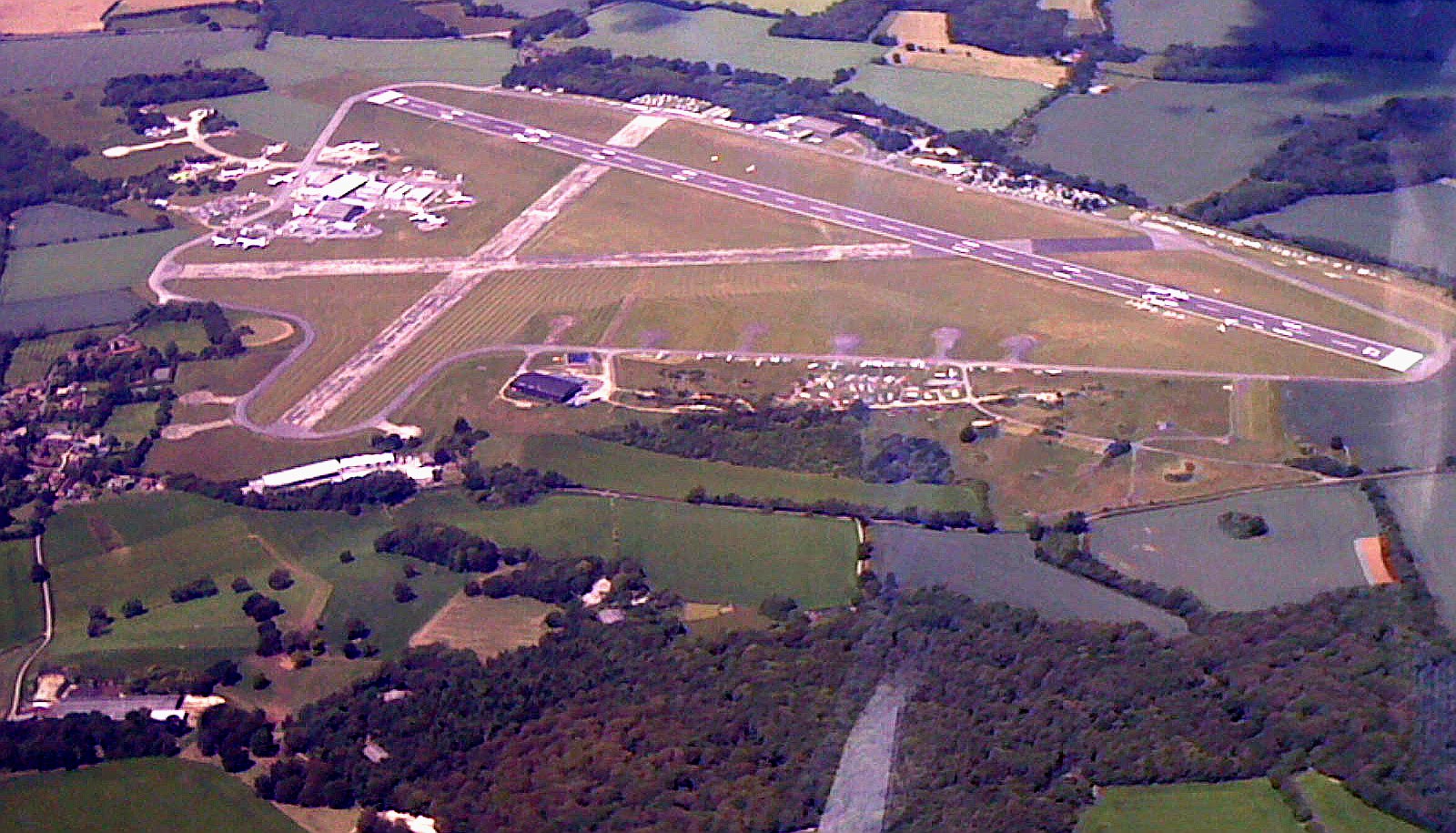
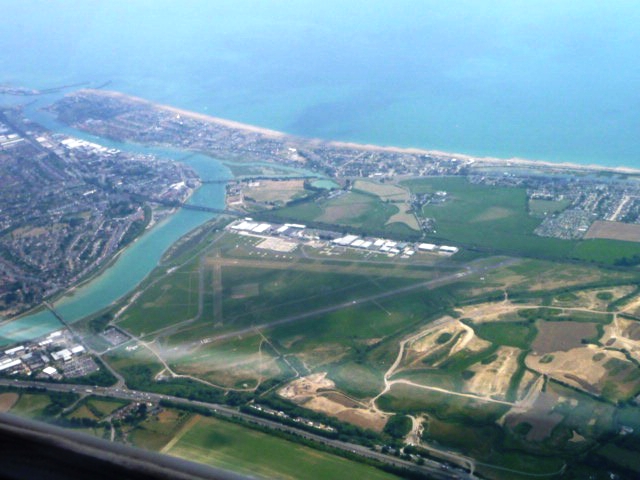
Picture of Lasham airfield taken from the south at about 3000 feet agl.

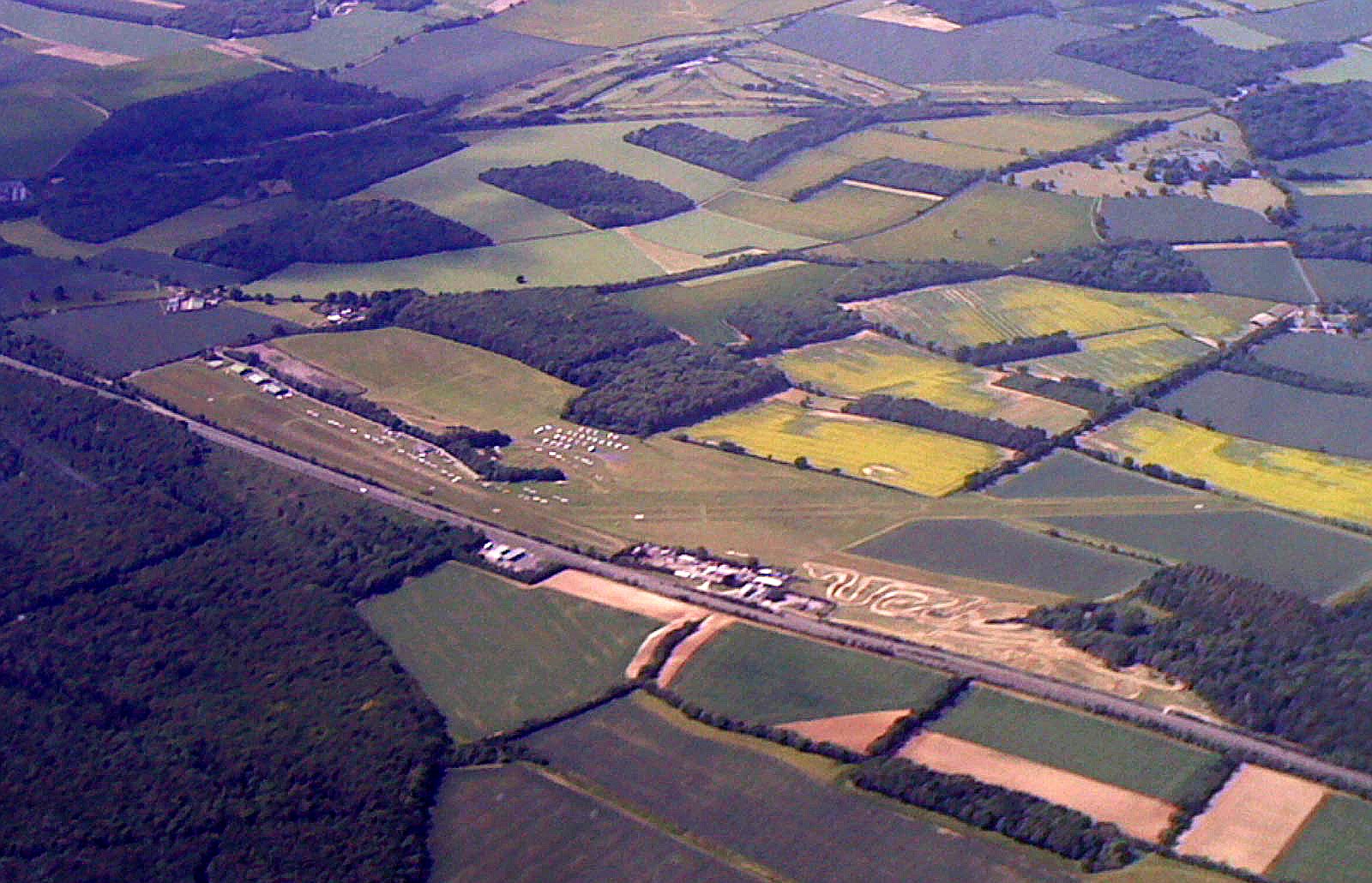
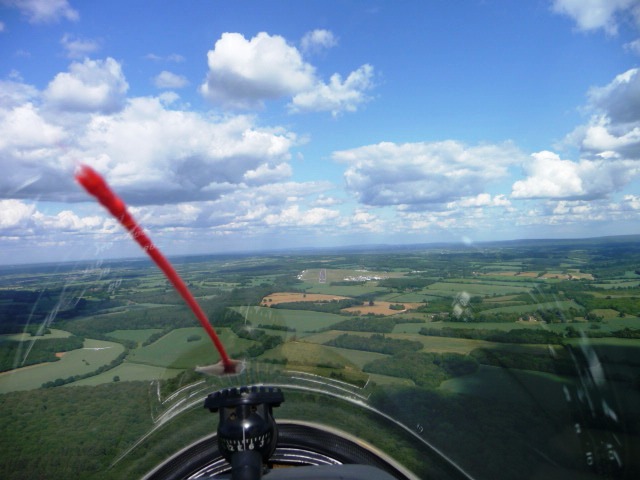
Picture of Popham airfield taken from 4500 feet agl.

A lot of the time I spent trying to understand how the clouds were working. There are times when they give lift and times when they don’t and as yet I am not so good at working out the difference.

By 4pm it was time to land and get ready to run the launch point in the evening for the Lasham youth flyers. But thanks to Val looking after the launch point at the very end, I did manage to have a couple of winch launched evening flights in the Astir before cleaning it and putting it to bed in the hangar.

A shot of the Astir (at 9pm) after its last flight of this wonderful 13 hour day.

The evening was completely calm and the glider slipped through the air with a sigh, as though it knew how I felt. I could trim the glider to a speed and it stayed there! Luxury, after the more turbulent conditions of the day.

Explanation : Trimming a Glider (or Aeroplane)
It makes the pilot’s flying life much easier if s/he manages to trim the glider correctly. The idea is to get the speed of the glider to the value you desire by adjusting the pitch (nose up/down) attitude. Once this is done there is a trim adjustment that helps keep the pitch steady so you can actually fly hands off. Some instructors tell you to take BOTH hands off the stick and wave them in the air so s/he can see you have trimmed the aircraft properly.

It is important because speed control is crucial to good flying and is one of the hardest things to get right.

And so home to bed…

Coming soon:
Time to get back into flying the motorglider and get my NPPL licence revalidated for the next 2 years.

GLIDER CHRONICLES 2011 – June : More Competition Pictures

One of the youth flyers, Alex, has made available some photos which complement my earlier post. He flew with Colin and G (yep, just ‘G’) in the Duo Discus 775. They did really well with Alex doing half of the flying, ending by coming 3rd overall by the end of the Lasham Regionals week.

So here we are. First pic with me looking like a wally. My normal state when on the airfield:

Me taking a picture of Alex taking a picture of Me taking a picture of Alex taking...

Alex taking a picture of Me taking a picture of Alex taking a picture of Me taking...

Val and Sophie (I believe) in the K21 778.

Shot of gliders already airborne and thermalling, while Alex waits...

Thermalling with another glider.

This proves they at least got to Shoreham.

Sometimes you have to find the lift where you can. Didcot power station.

Final glide to Lasham. Main runway 09/27 is just visible centre of picture.

Final glide again, but note the speed: 110kts, 125mph.

Explanation : Final Glide
The simple idea of a glider competition is to get around a specific route, the Task, as quickly as possible. You have to fly your glider, which has an on board GPS logger, around the run turnpoints of the task. Once you have got to your last turnpoint you are ready for the Final Glide home. This all needs to be done as fast as possible and it is possible to compute what your speed should be.

It depends upon a number of factors:

* Performance of the glider.
* Wind speed and direction.
* Distance to destination airfield.
* Planned arrival height at destination airfield.

Glide ratio for the Duo Discus 775 is 46 to 1, and the K21 33 to 1. So if you plug all those numbers in, you get your best ‘speed to fly’. The trouble is that real world atmosphere is not that simple and you will encounter sink and lift on the way which will affect the calculation. And that is where you find the art of it all. How do you make sure you get back home as fast as possible, yet without having to land out in a field.

Gliding is a life’s study.

ELECTRIC BIKE

Back in 2004 I used to cycle to and from work. This was about a 10 mile ride and thanks to my left knee having been damaged over the years – I blame it on cars with stiff clutches – the daily 20 miles of cycling caused it to swell and become painful.

So rather than doing the sane thing and taking the bus, carrying a folding bike – which I did later – I decided to play at engineering! I fitted an electric motor to my bike. Obviously!

I had forgotten I had this web page around so I am now posting it up here where it belongs. This is exactly the same bike as I used in the Scotland charity ride in 2010, and I still use it.

I have now removed the electric motor and drive to work. I found that during the winter when it was dark on the way home, I did not have the energy after a full day of work. I might take another look at the battery technology now to see about using it in the summer. That would be a fun piece of research since it is the batteries that are really the limiting factor.

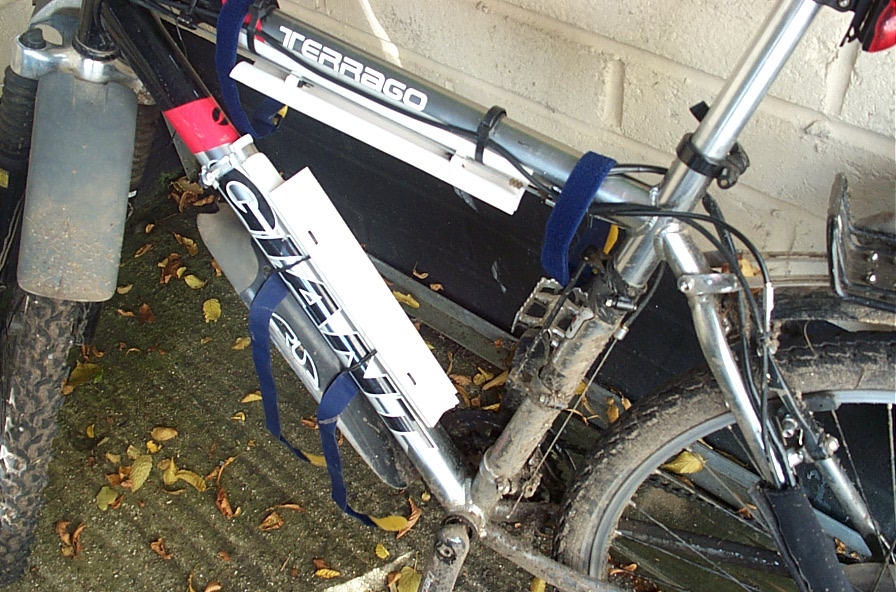
The bike is a standard Giant Terrago 2002 (rear wheel is 36 spoke pattern – this is important). I fitted the Currie US Pro-Drive system which attached to the rear wheel hub and spokes and had a 24V brushless DC motor. Scott MacGregor, EVDeals, in the US was extremely helpful and is a very authoritative source of information and parts.

Some photos. The bike is of course very grubby due to the off-road portion of the ride!

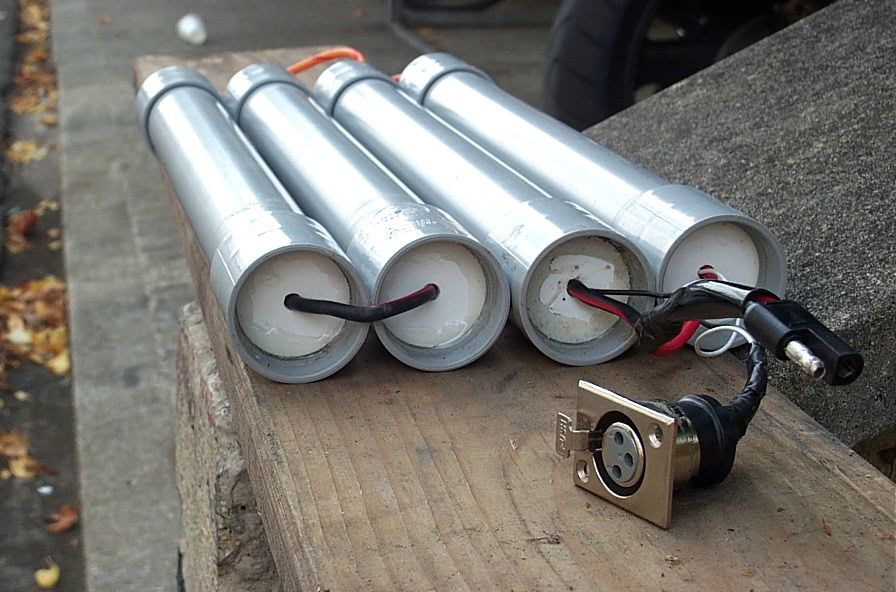
Battery mounting showing that they only just fitted within the frame.

Some photos without the batteries mounted:

Shot showing the motor attached to the rear wheel.

Photo showing the battery mountings.

The Ride
The cycle ride was 9.25 miles each way, 3 off road. The batteries when fully charged lasted the whole journey giving 17-18mph on the flat, so I got (with a fair level of assist) a 16mph average speed giving a 35 minute travel time (10 more than the average car journey).

Charging Regime
I recharged the batteries as soon as I arrived at work and as soon as I arrived home in the evening since it is just a slow charge rate (0.1C). Depending upon conditions (headwind etc) the day charge meant that the batteries would not last the whole way home. I was always on the lookout for a faster NiMH charger, but I didn’t have a temperature sensor on the battery pack. This would have been needed for higher charge rates to stop the batteries overheating. I would have used that only in the day since I had planned to only do a slow overnight 0.1C charge to keep the battery stress level down. The batteries were given a full 0.1C recharge at the weekend to even them out. The charger was a Lawtronics 0.1C charger.

The Batteries
The final battery setup was 20 NiMH (Nickel Metal Hydride) 1.2V ‘D’ cells of 7Ah each. Altogether they would deliver between 20 and 30 Amps peak!

The batteries were BYD H-D7000D types which I had intended to upgrade to the SAFT 8.5Ah D cells to give greater range. But at around £120 for a full set, which would only last one year, I demurred. I could also have used the SAFT 13Ah F cells which were twice the weight and half as long again as the D cells and would have needed another 2 tubes on the bike.

Overall, apart from more capacity and a faster charger I was very pleased with NiMH cells. The SLA (Sealed Lead Acid) gave me only a 40 minute ride time due to the voltage sag while riding. Also the NiMH cells only weigh in at 3kg against the 9kg for the SLA battery.

Getting a Decent Contact
The battery pack was originally connected in line, but not very tightly, and with about 1 inch of copper wire between each battery. This resulted in some voltage loss and a VERY high temperature during running and recharge. I then soldered them directly to one another – very tricky – and this all changed dramatically. Their charging temperature was “tepid” at the 0.1C rate and they hardly got warm during discharge at all, especially since they were in the air stream and had good cooling.

Construction
Its amazing what you can do with:
1: 32mm plastic drain pipe.
2: Some pipe sleeves.
3: Some blagged 9mm soffit board, cable ties, epoxy and B&Q velcro straps, plus all the wiring and batteries of course.

Construction Photos
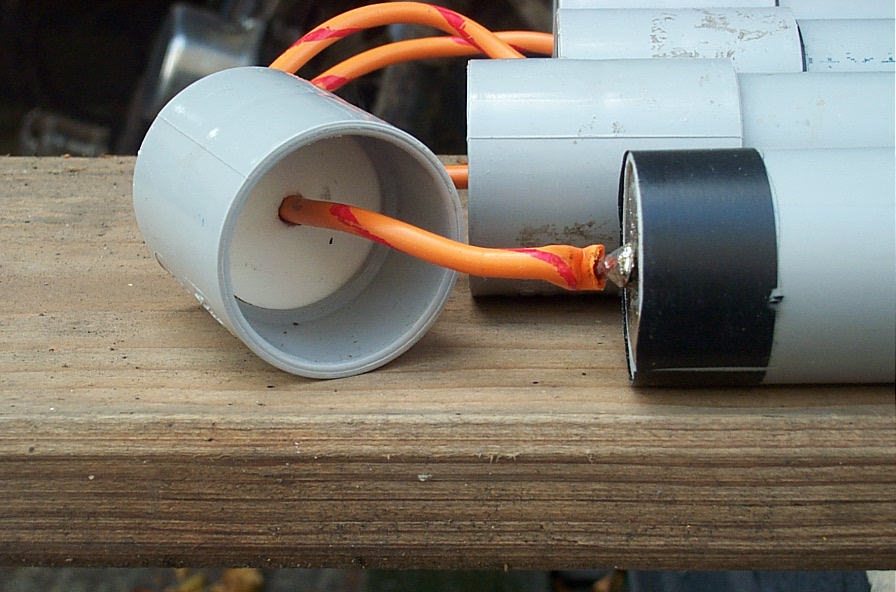
Although you cannot see them the batteries were a nice tight fit in the tubes and I soldered the wiring to their contacts. This is the only way to make this technology work well, because otherwise you lose too much power in the contacts.

Battery pack showing the audio charging connector and the bullet style main connector.

The other end of the batteries.

The internals of one end of the connection.

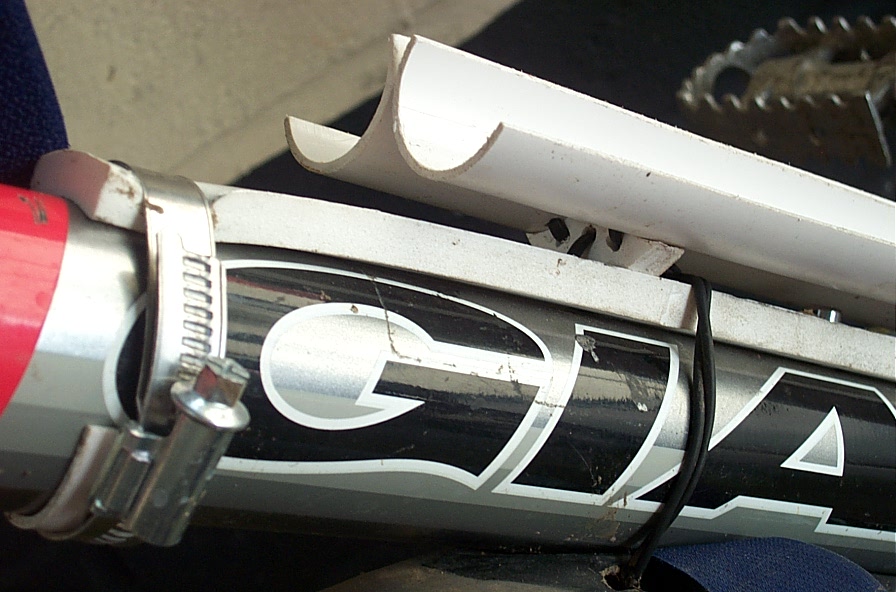
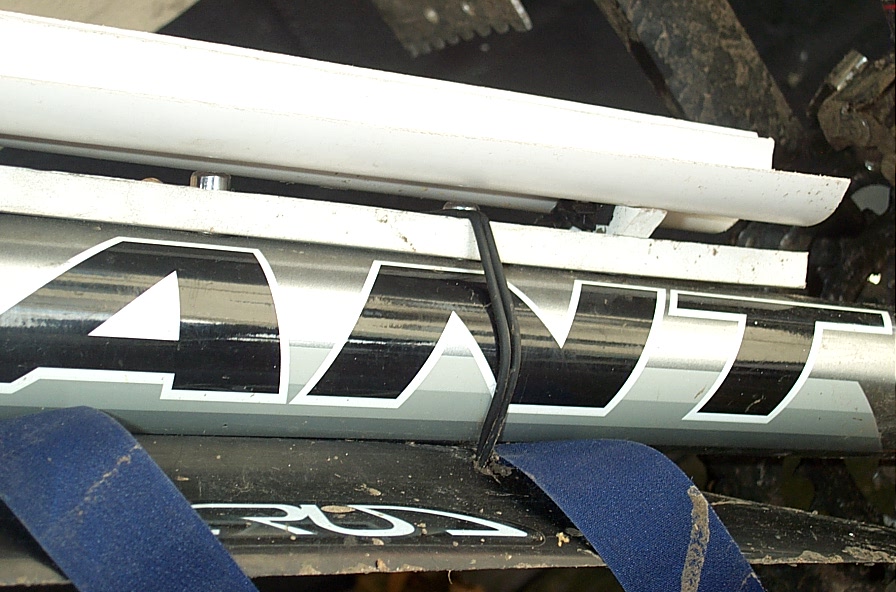
Closeup shot 1 of top mountings.

Closeup shot 2 of top mountings.

Closeup shot 3 of top mountings.

Closeup shot 1 of bottom mountings.

Closeup shot 2 of bottom mountings.

LINKS

Scott MacGregor, EVDeals, in the US. Knows his stuff and very helpful.

Yahoo power assist group, contains photos of disassembly.

4QD – controllers (brushless only), electronics etc. Some very useful documents.

AtoB mag.

Lawtronics, makers of battery chargers.

HOW TECH-AWAKE ARE YOU?

The title is not a misprint. I do not mean Tech-Aware. I mean Tech-Awake. Here is a little story and some thoughts:

Last Wednesday I was driving home from work and encountered an illustration of the problems of trying to set appropriate rules for traffic.

A High Energy Story
The road in question was a connecting road through an estate. It had a 30 mph speed limit and there was a barrier in front of the opening of a path. I was about 200 yards away from the path when I saw some children walking out from it and congregating next to the barrier. Some of them had bikes and I could see there was a possible hazard. Although the speed limit was 30 miles an hour, I decided to reduce my speed to 15 miles an hour. Sure enough when I was about 50 yards away from the barrier, a high energy child came whizzing out from the path like a particle shot from an accelerator and zoomed out across the road on his push scooter to the other side. All without looking for traffic coming from my direction. At 15 mph it was no problem to stop, leaving about 25 yards between me and the young boy in question.

This is not a rant about the children of today or the lack of parental control. Children bring life to the adult world and this boy certainly had plenty of it! I find myself wanting to celebrate that life.

I would rather question our indiscriminate and mostly unconscious use of powerful technologies that in truth we have less control over than we would imagine. A mantra I have is that accidents happen due to bad judgement. When a bad judgement coincides with the use of a powerful technology, such as a car or aeroplane, the situation is ripe for a tragic outcome.

So let me assess the situation I am in as the driver above:

Firstly : Technology amplifies my existing capacities, or gives me new capacities. Cars allow me to travel faster than walking; Aeroplanes allow me to fly (Wonderful!); and a final example: Computers amplify my thought – well a certain type of thought anyway.

Secondly : I can make mistakes. I am not a machine. I would not want to be a machine – a point of view that I believe confirms my sanity! Like our young children, making mistakes can bring life to our world. I enjoy musical improvisation where frequently a mistake can be turned into a beautiful thing.

So what am I to do?

Time to Wake Up
I have wanted to publish this post because I think that our use of technology is asking a fundamental question of us. It is asking us to become aware and most of all to WAKE-UP in our use of these tools.

The reason why this is so important is that when using a car, aeroplane or computer it is too easy to have too much trust in the system and frequently we go to sleep in some way. We may fall asleep at the wheel, rely on buggy fly-by-wire systems, or let computers (try) do some job we would be best doing ourselves.

So here we are – going to sleep, when we need to be waking up.

With flying it is blatantly obvious just how important it is to be careful. All you need do is look out of the window to the ground thousands of feet below while you are trusting the engine to keep on working. This is why as a pilot you are expected to learn a lot about the aeroplane and its systems, far more than you are expected to learn about car mechanics.

I have heard it said that the best way to make a car driver safer when driving around is to put a 6 inch knife blade on the steering wheel pointing towards the drivers chest! Hmmm. Not too sure about that but I can see the point. (Pun intended 😉 )

Would it be possible to work at holding that awareness of how powerful a machine you are using and to bring your awakeness up to meet the situation? I know I can do it when flying and I do my utmost to do so in the car. Though I can look back to the consequences when I have not done so and have felt especially stupid in those moments…

A Question to Ponder
Well there are some thoughts to consider and this time I will leave you with a question…

Is it asking too much for people to become more awake in their use of technology?

GLIDER CHRONICLES 2011 – June 4th : Strong Crosswind & Aerobatic Fun

Well, after all the action of the competition in the daytime the evening youth group turned out to be a quieter affair. In the end we had three instructors for the 8 or so “yoof”, but the conditions were windy and cross. Namely we had a strong 45degree crosswind which was curling over the trees on the approach on the north side of the main runway.

This meant that for most of the pupils, the instructors needed to do the take-offs and landings, which was not the greatest learning experience. However, it was a good introduction to just how much fun it can be battling the elements and still managing to do a great landing! The Falke motorglider was also flying and found it tricky enough that the pilot had to go-around and have another go at his landing.

Hats off to all the pilots if you ask me.

Explanation of Curl-Over
Curl-over is where the wind blows against an obstacle and on the downwind side curls around in what are called vortices. As the name implies these are twisting currents of air and are at least troublesome, and at worst, dangerous. It all depends upon exact conditions of windspeed and direction. As a recreational pilot you would not be flying if the wind was too strong anyway, so you should be able to handle them. Wake vortices from departing or arriving jets are another matter however and that will need an explanation in its own right at a later time. Go to the Lasham manual on coping with jet movements if you cannot wait!

Diagram (not to scale) of how a glider can get caught in the curlover from trees as it is landing.

A quieter Saturday evening launchpoint.

For those Cloud Appreciators among you, here is the effect you can get when a high flying aircraft disturbs the natural airflows. This is a graphic example of the effect of wake vortices. It is worth zooming into the picture and looking at it at full size to see the actual shapes of the vortices.

High flying aircraft leaves a vortex trail.

End of the Day and time for some Aerobatics
After the remaining K13 gliders had been flown back to the hangar…

Flying a K13 back to the hangar.

John and Val returned to the launchpoint to fly the remaining 2 aircraft back. Since the last glider was the K21 John took Callum and Helen up for a couple of aerobatic flights, always a highlight of the evening.

I also remember some banter about how wearing sunglasses that late in the evening was only for looking cool!

The last 2 flights of the day. A Grob102 and a K21. K21 off to do aerobatics.

Here is a shot of an earlier aerobatic glider, the Pilatus, off to practice some aeros in the “box” of sky reserved for such manoeuvres.

Pilatus aerobatic glider off for some loops.

Thats all for now, so until next time…

Happy flying!

GLIDER CHRONICLES 2011 – June 4th : Competition Saturday

Saturday was the penultimate day of the Lasham Regionals Competition and glider 775, one of the youth gliders, is currently standing at 3rd in the B class. 778 on the other hand is well down in last. However, fun has been had by all.

The schedule today was gruelling. Gliders were brought to the grid before the 10 o’clock briefing…

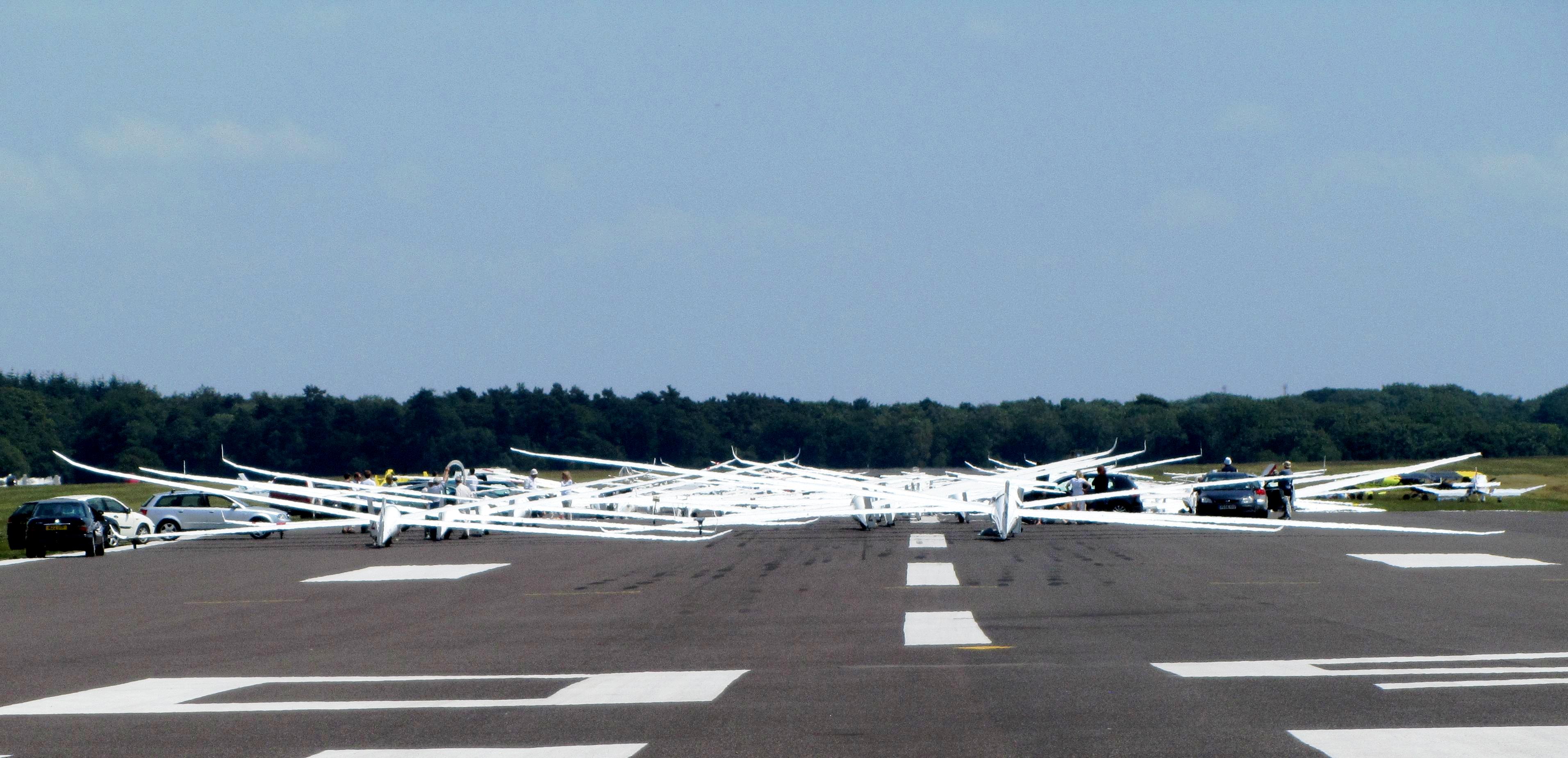
The glider grid assembled in the shimmering noonday heat,

And then had to wait…

One 778 pilot making the most of the wing area.

And wait…

Still waiting...

And wait…

Malcolm looks like he has done this before!

Until the pre-launched “sniffer” gliders announced thermals were starting so launching was to begin at 1:30. As you can see Sam in 778 was over the moon…

Sam is ready to roll.

So the tug planes were readied…

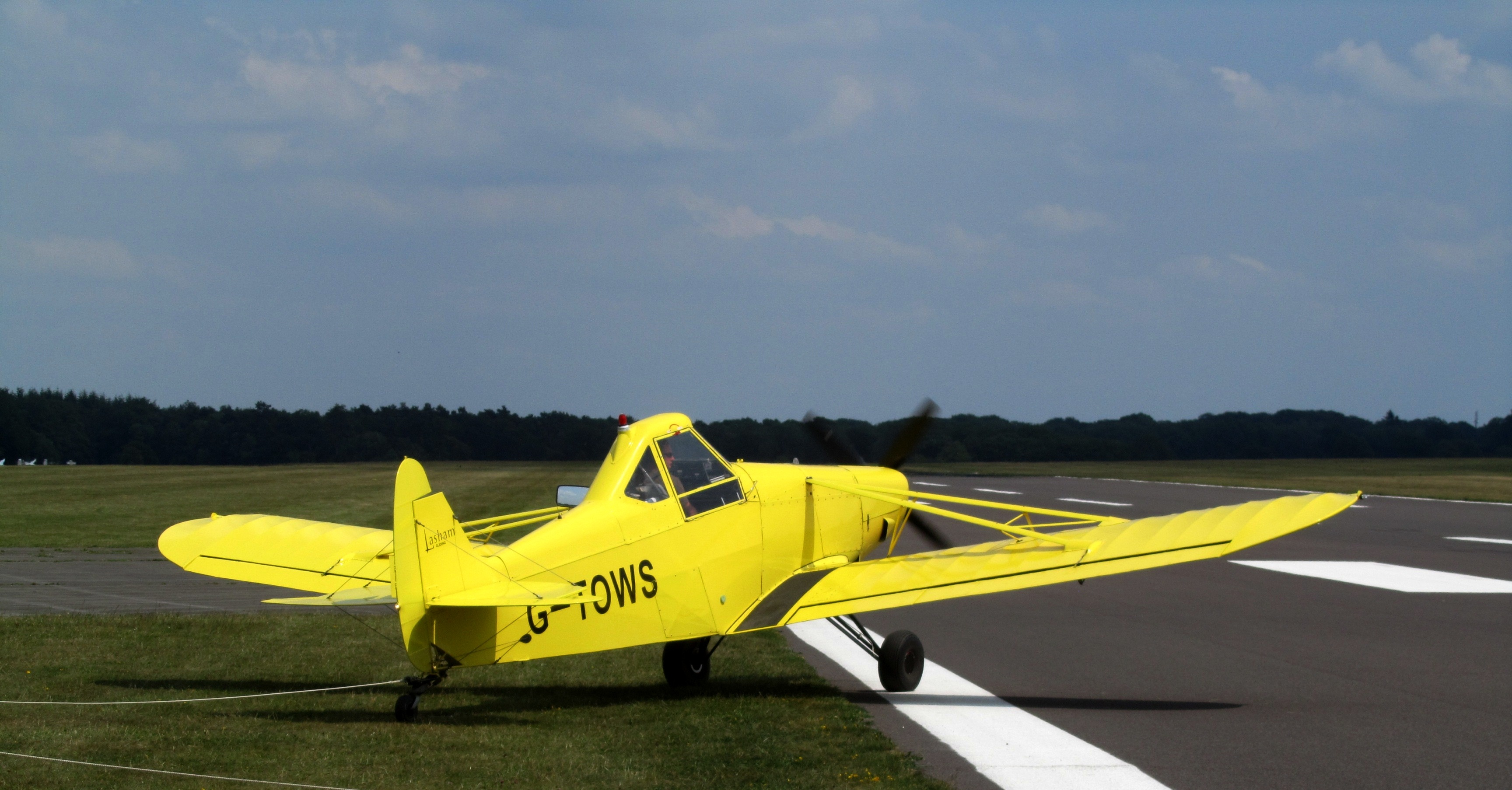
One of the more powerful Lasham tug planes. Recently refurbished.

And they were off…

At last we're rolling.

And away!

Airborne at last.

The task for the day? 103.6km total distance. Lasham to Illsley, just North of Newbury, then to Hurstbourne Tarrant, near Andover, eventually arriving back at Lasham to clean the bugs off the wing.

Time to clean the bugs off.

Meanwhile yours truly did not actually fly today since it was too windy but did find something to set his heart on. I know I am trying to get converted to the single seater Grob 102 glider, and that is a good next target..

One of the Lasham Grob 102s, affectionally know as Baby Grobs.


Although the cockpit is looking the worse for wear.

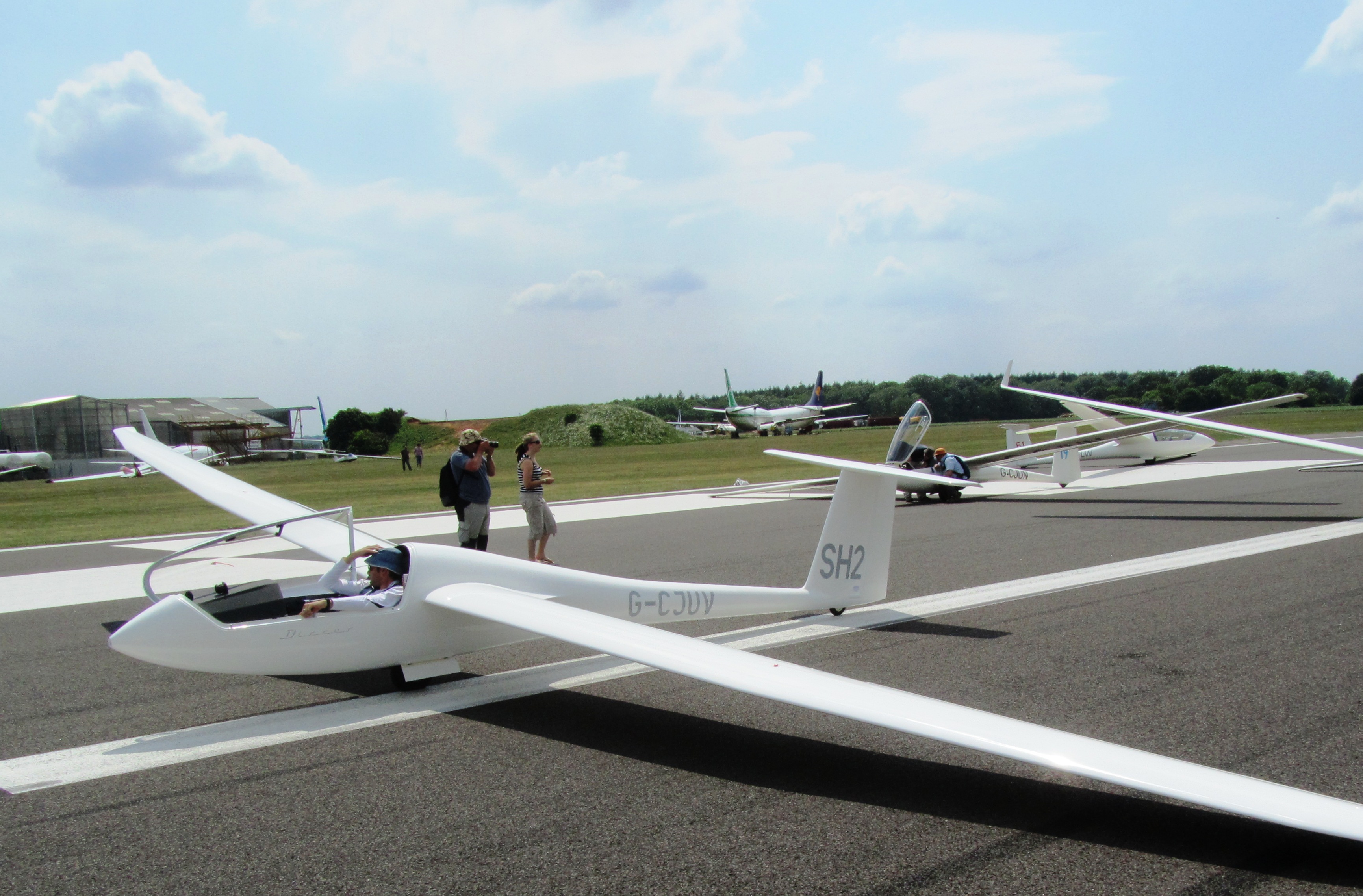
But my eyes alighted on one of the club Discus gliders, SH2, and now I am after getting checked out on that. Beautiful. We will have to see just how long it takes.

One of the lovely Schempp-Hirth Discus club gliders.
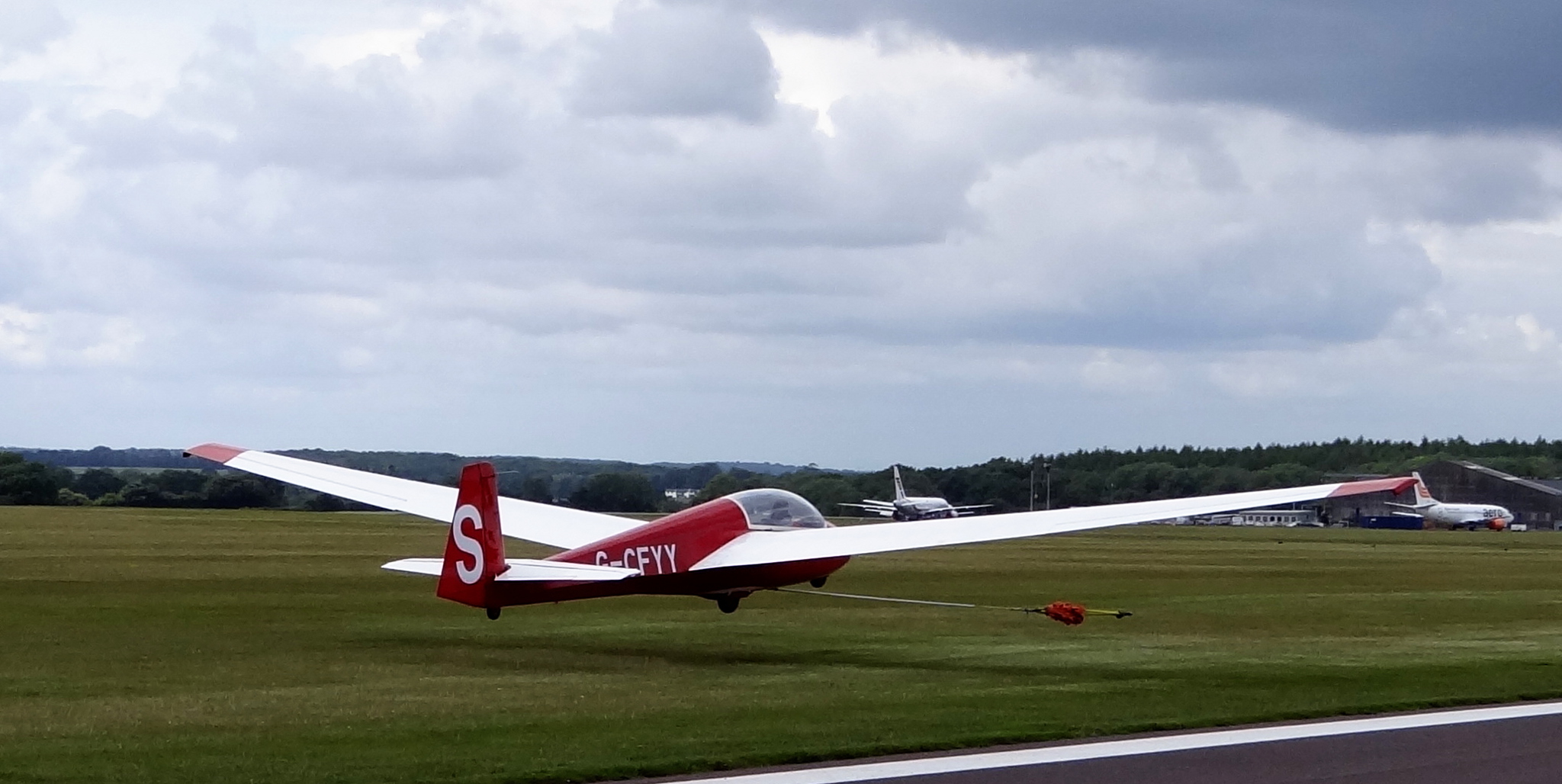
By the way “SH” stands for “Surrey & Hants”, one of the original clubs that were amalgamated to become the Lasham Gliding Society.
Next I have a report from the Saturday evening group which was tough flying due to the strength of the crosswind we had that day.